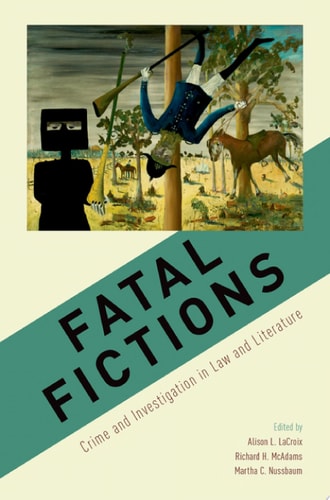
Fatal Fictions
0
0
As an Amazon Associate and affiliate partner, Menrva Books earns from qualifying purchases. Learn more
Author Description
Writers Of Fiction Have Always Confronted Topics Of Crime And Punishment. This Age-old Fascination With Crime On The Part Of Both Authors And Readers Is Not Surprising, Given That Criminal Justice Touches On So Many Political And Psychological Themes Essential To Literature, And Comes Equipped With A Trial Process That Contains Its Own Dramatic Structure. This Volume Explores This Profound And Enduring Literary Engagement With Crime, Investigation, And Criminal Justice. The Collected Essays Explore Three Themes That Connect The World Of Law With That Of Fiction. First, Defining And Punishing Crime Is One Of The Fundamental Purposes Of Government, Along With The Protection Of Victims By The Prevention Of Crime. And Yet Criminal Punishment Remains One Of The Most Abused And Terrifying Forms Of Political Power. Second, Crime Is Intensely Psychological And Therefore An Important Subject By Which A Writer Can Develop And Explore Character. A Third Connection Between Criminal Justice And Fiction Involves The Inherently Dramatic Nature Of The Legal System Itself, Particularly The Trial. Moreover, The Ongoing Public Conversation About Crime And Punishment Suggests That The Time Is Ripe For Collaboration Between Law And Literature In This Troubled Domain. The Essays In This Collection Span A Wide Array Of Genres, Including Tragic Drama, Science Fiction, Lyric Poetry, Autobiography, And Mystery Novels. The Works Discussed Include Works As Old As Fifth-century Bce Greek Tragedy And As Recent As Contemporary Novels, Memoirs, And Mystery Novels. The Cumulative Result Is Arresting: There Are Killer Wives And Crimes Against Trees; A Government Bureaucrat Who Sends Political Adversaries To Their Death For Treason Before Falling To The Same Fate Himself; A Convicted Murderer Who Doesn't Die When Hanged; A Psychopathogical Collector Whose Quite Sane Kidnapping Victim Nevertheless Also Collects; Justice Thomas' Reading And Misreading Of Bigger Thomas; A Man Who Forgives His Son's Murd
Menrva's Summary
THE THESIS
How does the intersection of criminal justice and literature reveal the underlying political and psychological complexities of human society? The authors, a group of legal scholars and academics, utilize a multidisciplinary framework to analyze how the mechanisms of crime, trial, and punishment function as both narrative devices and reflections of state power. By examining texts ranging from ancient Greek tragedy to contemporary memoirs, the collection argues that the legal system provides a unique dramatic structure that writers use to probe the limits of morality and governance.
THE SCOPE MAP
What You Will Find
- Analysis of the psychological development of characters through criminal acts.
- Examination of the trial process as a dramatic narrative structure.
- Comparative studies of legal theory and literary representation across diverse genres.
Scope Limits
- The text does not provide a comprehensive history of criminal law, focusing instead on its representation in literature.
- It does not offer practical legal advice or policy recommendations for current justice systems.
THE AUTHORITY PERSPECTIVE
Experts highlight this collection as a significant contribution to the interdisciplinary field of law and literature. Readers frequently note the academic density of the prose, which is well-suited for scholars and students interested in the intersection of jurisprudence and the humanities.
Page Count:
288
Publication Date:
2016-01-01
Publisher:
Oxford University Press
ISBN-10:
0190610794
ISBN-13:
9780190610791
Philosophy
Essays
Criminology
Law
Literary Criticism
Community Tags
Similar Books

Reader Comments
Share Your Thoughts
No comments yet. Be the first to share your thoughts!