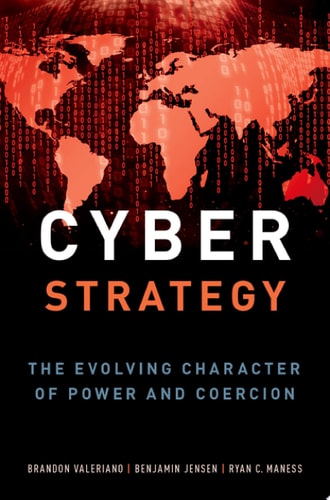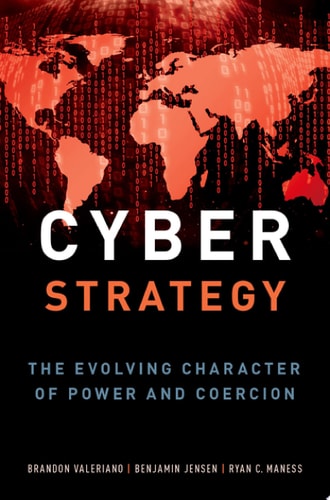
Cyber Strategy
0
0
As an Amazon Associate and affiliate partner, Menrva Books earns from qualifying purchases. Learn more
Author Description
Some Pundits Claim Cyber Weaponry Is The Most Important Military Innovation In Decades, A Transformative New Technology That Promises A Paralyzing First-strike Advantage Difficult For Opponents To Deter. Yet, What Is Cyber Strategy? How Do Actors Use Cyber Capabilities To Achieve A Position Of Advantage Against Rival States? This Book Examines The Emerging Art Of Cyber Strategy And Its Integration As Part Of A Larger Approach To Coercion By States In The International System Between 2000 And 2014. To This End, The Book Establishes A Theoretical Framework In The Coercion Literature For Evaluating The Efficacy Of Cyber Operations. Cyber Coercion Represents The Use Of Manipulation, Denial, And Punishment Strategies In The Digital Frontier To Achieve Some Strategic End. As A Contemporary Form Of Covert Action And Political Warfare, Cyber Operations Rarely Produce Concessions And Tend To Achieve Only Limited, Signaling Objectives. When Cyber Operations Do Produce Concessions Between Rival States, They Tend To Be Part Of A Larger Integrated Coercive Strategy That Combines Network Intrusions With Other Traditional Forms Of Statecraft Such As Military Threats, Economic Sanctions, And Diplomacy. The Books Finds That Cyber Operations Rarely Produce Concessions In Isolation. They Are Additive Instruments That Complement Traditional Statecraft And Coercive Diplomacy. The Book Combines An Analysis Of Cyber Exchanges Between Rival States And Broader Event Data On Political, Military, And Economic Interactions With Case Studies On The Leading Cyber Powers: Russia, China, And The United States. The Authors Investigate Cyber Strategies In Their Integrated And Isolated Contexts, Demonstrating That They Are Useful For Maximizing Informational Asymmetries And Disruptions, And Thus Are Important, But Limited Coercive Tools. This Empirical Foundation Allows The Authors To Explore How Leading Actors Employ Cyber Strategy And The Implications For International Relations In The 21st Century
Menrva's Summary
THE THESIS
This book investigates how states utilize cyber capabilities as instruments of coercion within the international system to achieve strategic advantages. The authors, Benjamin Jensen, Ryan C. Maness, and Brandon Valeriano, leverage their expertise in political science and security studies to construct a theoretical framework for evaluating cyber operations. By analyzing data from 2000 to 2014, they argue that cyber operations function most effectively as additive tools that complement traditional statecraft rather than as standalone decisive weapons.
THE SCOPE MAP
What You Will Find
- A theoretical framework for cyber coercion based on manipulation, denial, and punishment.
- Empirical analysis of cyber exchanges between rival states from 2000 to 2014.
- Comparative case studies focusing on the cyber strategies of Russia, China, and the United States.
- Integration of event data regarding political, military, and economic interactions.
Scope Limits
- The analysis is restricted to state-level actors and does not focus on non-state cybercriminal activity.
- The study concludes its primary data set in 2014, excluding more recent developments in cyber warfare.
THE AUTHORITY PERSPECTIVE
Experts and scholars in international relations frequently cite this work as a foundational text for understanding the limitations of cyber operations in modern statecraft. Readers often note the academic rigor of the prose and the authors' success in grounding abstract digital concepts within established theories of coercion and diplomacy.
Page Count:
288
Publication Date:
2018-01-01
Publisher:
Oxford University Press
ISBN-10:
0190618108
ISBN-13:
9780190618100
International relations
Military Strategy
Geopolitics
Cybersecurity
Community Tags
Similar Books