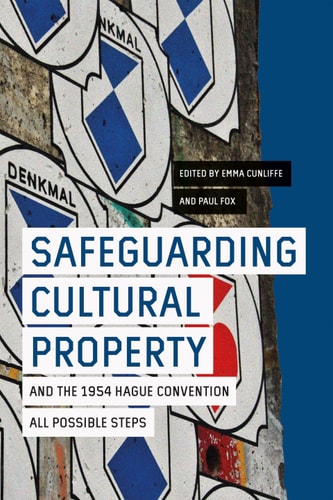
Safeguarding Cultural Property and the 1954 Hague Convention
0
0
As an Amazon Associate and affiliate partner, Menrva Books earns from qualifying purchases. Learn more
Author Description
The role of the Hague Convention in today's world revisited. Significant attention today focusses on heritage destruction, but the key international laws prohibiting it - the 1954 Hague Convention for the Protection of Cultural Property in the Event of Armed Conflict and its First and Second Protocols (1954/1999) - lay out two core strands to limit the damage: the measures of respect for armed forces, and the safeguarding measures states parties should put in place in peacetime. This volume incorporates wide-ranging international perspectives from those in the academy, together with practitioner insights from the armed forces and heritage professionals, to explore the safeguarding regime. Its contributors consider such questions as whether state parties have truly taken "all possible steps", as the Convention tasks them; what we can learn from past practice, and how the Convention is implemented today; the implications of new trends in heritage law and management - such as the rise of the World Heritage Convention, and in the increasing focus on safe havens rather than refuges; whether new methods of heritage management such as Risk Assessment theory can be applied; and, in a Convention specifically focussed on state parties, what of their opponents, armed non-state actors. Topics range from leadership and the role of the State Party Representative, to the responsibilities of armed non-state groups in safeguarding, to explorations of past and current practice in different countries. Using a mix of case studies and theoretical explorations of new and existing methodologies, the contributions cover a broad timespan from World War II to today, with examples from Europe, the Middle East, and Africa. Overall, the volume's purpose is to promote wider understanding of the practical effectiveness of the Convention in the contemporary world, by investigating the perceived opportunities and constraints the Convention offers today to protect cultural pro
Menrva's Summary
THE THESIS
The 1954 Hague Convention, a cornerstone of international law for protecting cultural property during armed conflict, is re-examined in light of contemporary challenges. This volume explores the Convention's dual pillars: the measures of respect required of armed forces and the safeguarding actions states should undertake in peacetime. It brings together academic and practitioner perspectives to assess the Convention's practical effectiveness, investigating whether states fulfill their obligations, learning from historical practices, and considering the impact of new trends like the World Heritage Convention and the rise of safe havens. The contributors also address the challenges posed by armed non-state actors and explore diverse implementation strategies across different regions and time periods.
THE SCOPE MAP
- Analysis of the 1954 Hague Convention and its Protocols (1954/1999) in the contemporary world.
- Exploration of 'measures of respect' for armed forces and 'safeguarding measures' for states.
- Insights from academics, armed forces practitioners, and heritage professionals.
- Discussion on whether states have taken 'all possible steps' as mandated by the Convention.
- Consideration of past practices and current implementation of the Convention.
- Implications of new trends such as the World Heritage Convention and 'safe havens'.
- Application of new heritage management methods like Risk Assessment theory.
- Examination of the role and responsibilities of armed non-state actors.
- Case studies and theoretical explorations from World War II to the present, with examples from Europe, the Middle East, and Africa.
THE AUTHORITY PERSPECTIVE
This volume is designed to foster a broader understanding of the 1954 Hague Convention's practical efficacy in the current global landscape. By examining the opportunities and constraints it presents for protecting cultural property, the contributors aim to provide a comprehensive overview of its contemporary relevance. The collection synthesizes academic research with practical insights from those directly involved in heritage protection and conflict resolution. Its interdisciplinary approach and wide-ranging case studies offer a thorough assessment of the Convention's effectiveness.
Page Count:
224
Publication Date:
2022-01-14
Publisher:
Ingram Publisher Services UK- Academic
ISBN-10:
1800104286
ISBN-13:
9781800104280
Non-Fiction
History
Politics
Conflict Studies
Law
International Law
Community Tags
Similar Books

Reader Comments
Share Your Thoughts
No comments yet. Be the first to share your thoughts!