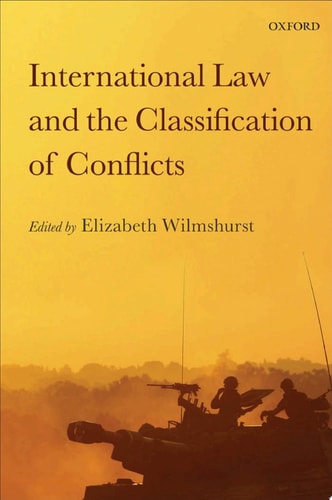
International Law and the Classification of Conflicts
0
0
As an Amazon Associate and affiliate partner, Menrva Books earns from qualifying purchases. Learn more
Author Description
This book comprises contributions by leading experts in the field of international humanitarian law on the subject of the categorisation or classification of armed conflict. It is divided into two sections: the first aims to provide the reader with a sound understanding of the legal questions surrounding the classification of hostilities and its consequences; the second includes ten case studies that examine practice in respect of classification. Understanding how classification operates in theory and practice is a precursor to identifying the relevant rules that govern parties to hostilities. With changing forms of armed conflict which may involve multi-national operations, transnational armed groups and organized criminal gangs, the need for clarity of the law is all-important. The case studies selected for analysis are Northern Ireland, DRC, Colombia, Afghanistan (from 2001), Gaza, South Ossetia, Iraq (from 2003), Lebanon (2006), the so-called war against Al-Qaeda, and future trends. The studies explore the legal consequences of classification particularly in respect of the use of force, detention in armed conflict, and the relationship between human rights law and international humanitarian law. The practice identified in the case studies allows the final chapter to draw conclusions as to the state of the law on classification.
Menrva's Summary
THE THESIS
This book investigates the legal complexities and practical consequences of classifying armed conflicts within the framework of international humanitarian law. Elizabeth Wilmshurst, a recognized expert in international law, compiles contributions from leading scholars to address how the categorization of hostilities dictates the applicable legal rules. The text argues that as modern warfare evolves to include transnational groups and non-state actors, a rigorous understanding of classification is necessary to ensure compliance with international standards.
THE SCOPE MAP
What You Will Find
- Legal frameworks governing the classification of international and non-international armed conflicts
- Analysis of the intersection between human rights law and international humanitarian law
- Ten detailed case studies including Northern Ireland, Afghanistan, Iraq, and the conflict against Al-Qaeda
Scope Limits
- The text does not provide a comprehensive history of every global conflict since 2000
- It does not offer a definitive legislative manual but rather an analytical survey of existing legal practice
THE AUTHORITY PERSPECTIVE
Legal scholars and practitioners frequently cite this work as a foundational text for understanding the nuances of conflict classification in the modern era. Experts highlight the book's utility in bridging the gap between theoretical legal doctrine and the practical realities of contemporary multi-national operations.
Page Count:
553
Publication Date:
2012-01-01
Publisher:
OUP Oxford
ISBN-10:
0191632236
ISBN-13:
9780191632235
International Law
Conflict Studies
Professional Career & Trade
Military History
Community Tags
Other Editions(4)



Similar Books

Reader Comments
Share Your Thoughts
No comments yet. Be the first to share your thoughts!