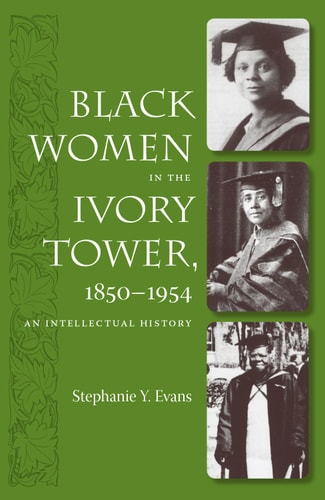
Black Women in the Ivory Tower, 1850-1954: An Intellectual History
0
0
As an Amazon Associate and affiliate partner, Menrva Books earns from qualifying purchases. Learn more
Author Description
Provides scholars with a historical lens from which to view the higher education of black women... [and] how one generation of black women benefited from the work and sacrifices of the prior generation.--Adah L. Ward Randolph, Ohio University "Keen historical and theoretical observation of African American women's relationship to educational institutions in the United States."--Heidi Lasley Barajas, University of Minnesota Evans chronicles the stories of African American women who struggled for and won access to formal education, beginning in 1850, when Lucy Stanton, a student at Oberlin College, earned the first college diploma conferred on an African American woman. In the century between the Civil War and the civil rights movement, a critical increase in black women's educational attainment mirrored unprecedented national growth in American education. Evans reveals how black women demanded space as students and asserted their voices as educators--despite such barriers as violence, discrimination, and oppressive campus policies--contributing in significant ways to higher education in the United States. She argues that their experiences, ideas, and practices can inspire contemporary educators to create an intellectual democracy in which all people have a voice. Among those Evans profiles are Anna Julia Cooper, who was born enslaved yet ultimately earned a doctoral degree from the Sorbonne, and Mary McLeod Bethune, founder of Bethune-Cookman College. Exposing the hypocrisy in American assertions of democracy and discrediting European notions of intellectual superiority, Cooper argued that all human beings had a right to grow. Bethune believed that education is the right of all citizens in a democracy. Both women's philosophies raised questions of how human and civil rights are intertwined with educational access, scholarly research, pedagogy, and community service. This first complete educational and intellectual history of black wome
Menrva's Summary
THE THESIS
This book investigates the intellectual contributions and educational experiences of Black women in American higher education from 1850 to 1954. Stephanie Y. Evans, drawing on extensive historical research, chronicles the struggles and triumphs of African American women who sought and achieved access to formal education during a pivotal century in U.S. history. The work highlights how generations of Black women built upon the sacrifices of their predecessors, demanding space as students and asserting their voices as educators despite pervasive barriers of violence, discrimination, and oppressive institutional policies. Evans argues that their collective experiences and intellectual output offer valuable lessons for contemporary educators striving to foster an inclusive intellectual democracy.
THE SCOPE MAP
- Covers the period from 1850, marking Lucy Stanton's diploma from Oberlin College, to 1954, preceding the civil rights movement.
- Examines the educational attainment of Black women in relation to national growth in American education.
- Details how Black women actively demanded access as students and asserted themselves as educators.
- Analyzes the barriers faced by Black women, including violence, discrimination, and oppressive campus policies.
- Profiles key figures such as Anna Julia Cooper, who earned a doctorate from the Sorbonne, and Mary McLeod Bethune, founder of Bethune-Cookman College.
- Explores the philosophies of figures like Cooper and Bethune regarding human and civil rights intertwined with education, research, pedagogy, and community service.
- Presents an intellectual history that challenges notions of intellectual superiority and highlights the hypocrisy in American democratic ideals.
- Argues for the inspirational potential of these historical experiences for contemporary educators aiming to create intellectual democracy.
THE AUTHORITY PERSPECTIVE
This work is recognized for providing scholars with a crucial historical lens through which to understand the higher education of Black women and the intergenerational benefits of their sacrifices. Critics have lauded its keen historical and theoretical observation of African American women's engagement with educational institutions in the United States. The book is noted for its detailed chronicle of Black women's pursuit of education and their significant contributions to higher learning, despite facing considerable adversity. Its argument that these experiences can inspire contemporary educators to build an intellectual democracy is a central takeaway.
Page Count:
290
Publication Date:
2008-05-18
Publisher:
University Press of Florida
ISBN-10:
0813032687
ISBN-13:
9780813032689
Non-Fiction
Biography
History
Intellectual History
Higher Education
Community Tags
Other Editions(2)

Similar Books






Reader Comments
Share Your Thoughts
No comments yet. Be the first to share your thoughts!