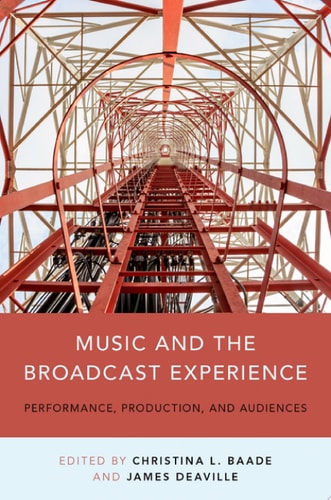
Music & the Broadcast Experience: Performance, Production, and Audiences
0
0
As an Amazon Associate and affiliate partner, Menrva Books earns from qualifying purchases. Learn more
Author Description
Music and the Broadcast Experience explores the complex ways in which music and broadcasting have developed together throughout the twentieth and into the twenty-first centuries. It brings into dialogue researchers working in media and music studies; explores and develops crucial points of contact between studies of music in radio and music in television; and investigates the limits, persistence, and extensions of music broadcasting in the Internet era. The book presents a series of case studies that address key moments and concerns in music broadcasting, past and present, written by leading scholars in the field, who hail from both media and music studies. Unified by attentiveness both to musical sound and meaning and to broadcasting structures, practices, audiences, and discourses, the chapters in this collection address the following topics: the role of live orchestral concerts and opera in the early development of radio and their relation to ideologies of musical uplift; the relation between production culture, music, and television genre; the function of music in sponsored radio during the 1930s; the fortunes of musical celebrity and artistic ambition on television; questions of music format and political economy in the development of online radio; and the negotiation of space, community, and participation among audiences, online and offline, in the early twenty-first century. The collection's ultimate aim is to explore the usefulness and limitations of broadcasting as a concept for understanding music and its cultural role, both historically and today.
Menrva's Summary
THE THESIS
This collection investigates the historical and contemporary intersection of music and broadcasting to determine how these mediums have co-evolved to shape cultural meaning. Editors Christina Baad and James A. Deaville curate a series of scholarly contributions that bridge the gap between musicology and media studies. By analyzing production practices, institutional structures, and audience reception, the authors argue that broadcasting remains a critical framework for understanding the dissemination and consumption of music from the early twentieth century to the digital age.
THE SCOPE MAP
What You Will Find
- Historical analysis of live orchestral and operatic broadcasts in early radio.
- Examination of production cultures and genre conventions in television music.
- Case studies on sponsored radio, musical celebrity, and political economy in online media.
- Theoretical exploration of audience participation and community formation in digital spaces.
Scope Limits
- The text does not provide a comprehensive technical manual for audio or video production.
- It does not cover the entirety of global broadcasting history, focusing instead on specific Western-centric case studies.
THE AUTHORITY PERSPECTIVE
Scholars in the fields of media and music studies view this collection as a significant interdisciplinary resource for understanding the evolution of broadcast sound. Readers frequently note the academic density of the prose, which serves as a foundational text for students and researchers interested in the intersection of technology and musical culture.
Page Count:
363
Publication Date:
2016-01-01
Publisher:
Oxford University Press
ISBN-10:
0190619538
ISBN-13:
9780190619534
Film & Video
Musicology
Communication
Cultural History
Media Studies
Broadcasting
Radio Studies
Humanities
Community Tags
Similar Books