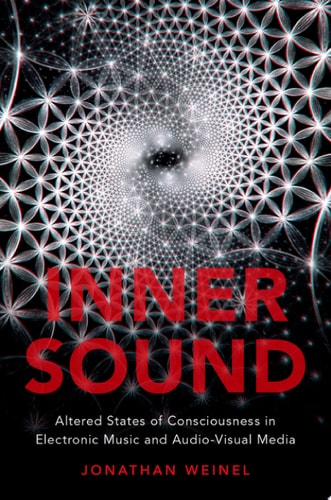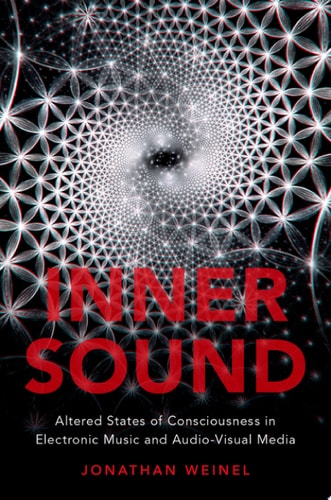
Inner Sound: Altered States of Consciousness in Electronic Music and Audio-Visual Media
0
0
As an Amazon Associate and affiliate partner, Menrva Books earns from qualifying purchases. Learn more
Author Description
Over the last century, developments in electronic music and art have enabled new possibilities for creating audio and audio-visual artworks. With this new potential has come the possibility for representing subjective internal conscious states, such as the experience of hallucinations, using digital technology. Combined with immersive technologies such as virtual reality goggles and high-quality loudspeakers, the potential for accurate simulations of conscious encounters such as Altered States of Consciousness (ASCs) is rapidly advancing. In Inner Sound, author Jonathan Weinel traverses the creative influence of ASCs, from Amazonian chicha festivals to the synaesthetic assaults of neon raves; and from an immersive outdoor electroacoustic performance on an Athenian hilltop to a mushroom trip on a tropical island in virtual reality. Beginning with a discussion of consciousness, the book explores how our subjective realities may change during states of dream, psychedelic experience, meditation, and trance. Taking a broad view across a wide range of genres, Inner Sound draws connections between shamanic art and music, and the modern technoshamanism of psychedelic rock, electronic dance music, and electroacoustic music. Going beyond the sonic into the visual, the book also examines the role of altered states in film, visual music, VJ performances, interactive video games, and virtual reality applications. Through the analysis of these examples, Weinel uncovers common mechanisms, and ultimately proposes a conceptual model for Altered States of Consciousness Simulations (ASCSs). This theoretical model describes how sound can be used to simulate various subjective states of consciousness from a first-person perspective, in an interactive context. Throughout the book, the ethical issues regarding altered states of consciousness in electronic music and audio-visual media are also examined, ultimately allowing the reader not only to consider the design of ASCSs, but also the implications of their use.
Menrva's Summary
THE THESIS
This book investigates how electronic music and audio-visual media can be utilized to simulate subjective altered states of consciousness (ASCs) through digital technology. Jonathan Weinel, an expert in music and digital media, synthesizes research from psychology, shamanic traditions, and contemporary electronic art to explore the intersection of human perception and technological simulation. He proposes a conceptual framework for Altered States of Consciousness Simulations (ASCSs) to explain how sound and visual stimuli can replicate internal experiences like hallucinations, trance, and meditative states.
THE SCOPE MAP
What You Will Find
- A conceptual model for Altered States of Consciousness Simulations (ASCSs)
- Analysis of diverse media including electronic dance music, film, video games, and virtual reality
- Historical and cultural context ranging from shamanic rituals to modern technoshamanism
- Ethical considerations regarding the design and impact of consciousness-altering media
Scope Limits
- The text focuses primarily on digital and electronic media rather than traditional acoustic or non-technological art forms
- It does not provide a clinical medical guide for the treatment of psychological conditions
THE AUTHORITY PERSPECTIVE
Experts in musicology and media studies recognize this work as a significant contribution to the study of sensory perception and digital art. Readers frequently note the academic density of the prose, which serves as a foundational text for those interested in the intersection of consciousness studies and interactive media design.
Page Count:
222
Publication Date:
2018-01-01
Publisher:
Oxford University Press
ISBN-10:
0190671211
ISBN-13:
9780190671211
Psychology
Humanities
Engineering
Audio
Sound acoustics
Professional Career & Trade
Media Studies
Technology
Popular music
Musicology
Community Tags
Similar Books