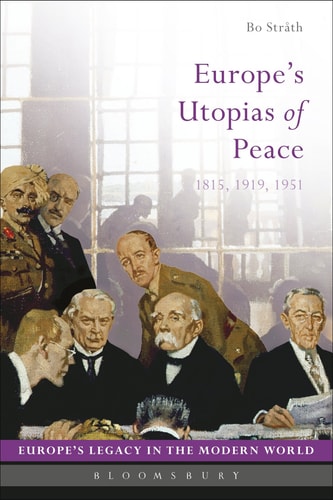
Europe's Utopias of Peace 1815, 1919, 1951
0
0
As an Amazon Associate and affiliate partner, Menrva Books earns from qualifying purchases. Learn more
Author Description
Europe's Utopias of Peace explores attempts to create a lasting European peace in the aftermath of the Napoleonic wars and the two world wars. The book charts the 250 year cycle of violent European conflicts followed by new utopian formulations for peace. The utopian illusion was that future was predictable and rules could prescribe behaviour in conflicts to come. Bo Stråth examines the reiterative bicentenary cycle since 1815, where each new postwar period built on a design for a project for European unification. He sets out the key historical events and the continuous struggle with nationalism, linking them to legal, political and economic thought. Biographical sketches of the most prominent thinkers and actors provide the human element to this narrative. Europe's Utopias of Peace presents a new perspective on the ideological, legal, economic and intellectual conditions that shaped Europe since the 19th century and presents this in a global context. It challenges the conventional narrative on Europe's past as a progressive enlightenment heritage, highlighting the ambiguities of the legacies that pervade the institutional structures of contemporary Europe. Its long-term historical perspective will be invaluable for students of contemporary Europe or modern European history.
Menrva's Summary
THE THESIS
This book investigates the recurring utopian visions of peace that have emerged in Europe following major conflicts since 1815. It examines a 250-year cycle where periods of intense conflict have been followed by idealistic formulations for lasting peace, particularly in the wake of the Napoleonic Wars and the two World Wars. The author, Bo Stråth, analyzes how each post-war era attempted to build upon previous designs for European unification, exploring the persistent tension between nationalism and the drive for integration. The book links key historical events to legal, political, and economic thought, incorporating biographical sketches of influential thinkers and actors to provide a human dimension to this historical narrative.
THE SCOPE MAP
- Analysis of utopian peace projects in the aftermath of the Napoleonic Wars (1815), World War I (1919), and World War II (1951).
- Exploration of the 250-year cycle of European conflict and subsequent peace formulations.
- Examination of the role of nationalism in shaping and challenging European unification projects.
- Integration of legal, political, and economic thought with historical events.
- Biographical insights into key thinkers and actors involved in peace initiatives.
- A new perspective on the ideological, legal, economic, and intellectual conditions shaping modern Europe.
- Discussion of the ambiguities in Europe's historical legacies within a global context.
THE AUTHORITY PERSPECTIVE
The book offers a long-term historical perspective on the ideological, legal, economic, and intellectual conditions that have shaped Europe since the 19th century. It challenges conventional narratives by highlighting the ambiguities within Europe's progressive heritage and their impact on contemporary institutional structures. The work is presented as invaluable for students of contemporary Europe and modern European history. Its analysis of recurring utopian visions of peace provides a critical lens through which to understand the continent's past and present.
Page Count:
552
Publication Date:
2016-01-28
Publisher:
Bloomsbury Academic
ISBN-10:
147423772X
ISBN-13:
9781474237727
Politics
Non-Fiction
History
European History
Community Tags
Similar Books