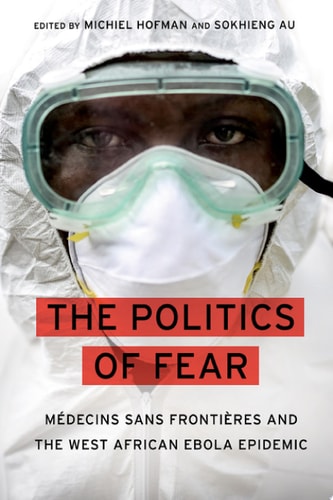
The Politics of Fear
0
0
As an Amazon Associate and affiliate partner, Menrva Books earns from qualifying purchases. Learn more
Author Description
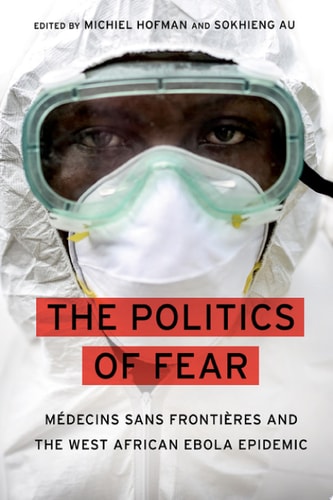
The 2014-2015 Ebola epidemic in West Africa was an unprecedented medical and political emergency that cast an unflattering light on multiple corners of government and international response. Fear, not rational planning, appeared to drive many decisions made at population and leadership levels, which in turn brought about a response that was as uneven as it was unprecedented: entire populations were decimated or destroyed, vaccine trials were fast-tracked, health staff died, untested medications were used (or not used) in controversial ways, humanitarian workers returned home to enforced isolation, and military was employed to sometimes disturbing ends. The epidemic revealed serious fault lines at all levels of theory and practice of global public health: national governments were shown to be helpless and unprepared for calamity at this scale; the World Health Organization was roundly condemned for its ineffectiveness; the US quietly created its own African CDC a year after the epidemic began. Amid such chaos, Médecins Sans Frontières was forced to act with unprecedented autonomy -- and amid great criticism -- in responding to the disease, taking unprecedented steps in deploying services and advocating for international aid. The Politics of Fear provides a primary documentary resource for recounting and learning from the Ebola epidemic. Comprising eleven topic-based chapters and four eyewitness vignettes from both MSF- and non-MSF-affiliated contributors (all of whom have been given access to MSF Ebola archives from Guinea, Sierra Leone, and Liberia for research), it aims to provide a politically agnostic account of the defining health event of the 21st century so far, one that will hopefully inform current opinions and future responses.
Menrva's Summary
THE THESIS
This book investigates how fear, rather than rational planning, dictated the trajectory of the 2014-2015 Ebola epidemic in West Africa. Authors Michiel Hofman and Sokhieng Au, drawing upon their extensive experience with Médecins Sans Frontières and exclusive access to internal archives, analyze the systemic failures of national governments and international health organizations. The text argues that the crisis exposed critical fault lines in global public health, necessitating a reevaluation of how future outbreaks are managed and resourced.
THE SCOPE MAP
What You Will Find
- Analysis of the 2014-2015 Ebola epidemic in Guinea, Sierra Leone, and Liberia.
- Examination of the political and logistical responses from the World Health Organization and national governments.
- Eleven topic-based chapters and four eyewitness accounts from humanitarian workers.
- Primary source documentation from internal Médecins Sans Frontières archives.
Scope Limits
- The book does not provide a comprehensive clinical manual for treating Ebola.
- It does not offer a definitive medical history of the virus outside of the 2014-2015 outbreak context.
THE AUTHORITY PERSPECTIVE
Experts and public health professionals frequently cite this work as a critical, primary-source account of the logistical and political failures during the West African Ebola crisis. Readers often note the academic density of the prose and the unflinching critique of international humanitarian response mechanisms.
Page Count:
240
Publication Date:
2017-01-01
Publisher:
Oxford University Press
ISBN-10:
0190624485
ISBN-13:
9780190624484
Non-Fiction
History
Public Health
Epidemiology
Community Tags
Similar Books