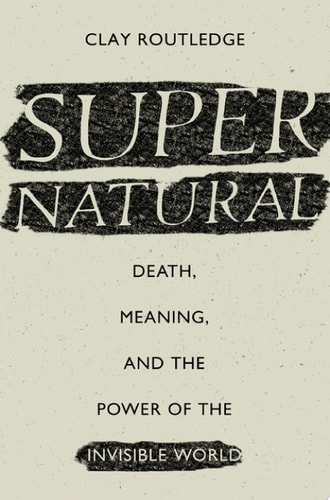
Supernatural: Death, Meaning, and the Power of the Invisible World
0
0
As an Amazon Associate and affiliate partner, Menrva Books earns from qualifying purchases. Learn more
Author Description
Humans Are Existential Animals. We Are All Fully Aware Of Our Fragility, Transience, And Potential Cosmic Insignificance. Our Ability To Ponder The Big Questions About Death And Meaning And The Anxiety That These Questions Can Provoke Have Motivated Us To Be A Species Not Only Concerned About Survival, But Also About Our Significance. The Quest For Transcendent Meaning Is One Reason Why Humans Embrace The Supernatural. Children Naturally See The World As Magical, Yet When Humans Reach Full Cognitive Development They Are Still Drawn To Supernatural Beliefs And Ideas That Defy The Laws Of Physics. Even Those Who Consider Themselves Secular Or Atheists Are Seduced By Supernatural Belief Systems. Clay Routledge, An Experimental Social Psychologist Who Grew Up In A Deeply Religious Environment, Asserts That Belief Or Trust In Forces Beyond Our Understanding Is Rooted In Our Fears Of Death. In Supernatural: Death, Meaning, And The Power Of The Invisible World, He Reveals Just How Universal Supernatural Thinking Is, And How This Kind Of Thinking Is Adaptive And Even Healthy. Routledge Takes Readers Through A Wide Range Of Fascinating Research From Psychology That Paints A Picture Of Humans As Innate Supernatural Thinkers. Exploring Research From The Emerging Field Of Experimental Existential Psychology, He Makes The Case That All Humans Have The Same Underlying Existential Needs, With Similar Coping Strategies Across Times, Cultures, And Degrees Of Religiousness. Surprisingly, Cultural Institutions Such As Sports, Environmentalism, Secular Humanism, And Science Also Showcase Supernatural Attributes And Qualities. Indeed, Studies Show That Supernatural Thinking Assuages Stress And Anxiety And Improves Mood And Psychological Well-being. But There Is A Potential Dark Side To This Line Of Thinking: It Can Lead To Personal And Social Problems, And Some Individuals Can Take It A Step Too Far. However, Routledge Argues That This Dark Side Of Supernatural Thinking Is The Exception
Menrva's Summary
THE THESIS
This book investigates why human beings, despite their capacity for rational thought and scientific understanding, remain fundamentally drawn to supernatural beliefs and invisible forces. Clay Routledge, an experimental social psychologist, utilizes findings from the emerging field of experimental existential psychology to argue that supernatural thinking is a universal, adaptive mechanism. He posits that these beliefs serve as a primary psychological defense against the existential anxiety triggered by our awareness of death and cosmic insignificance.
THE SCOPE MAP
What You Will Find
- Analysis of experimental existential psychology research regarding human cognition.
- Examination of how secular institutions, including sports and science, mirror supernatural belief structures.
- Evidence linking supernatural thinking to improved psychological well-being and stress reduction.
Scope Limits
- The text does not provide a theological or metaphysical validation of supernatural claims.
- It does not focus on the historical evolution of specific organized religions.
THE AUTHORITY PERSPECTIVE
Experts in the field of psychology recognize this work as a clear synthesis of existential research for a general audience. Readers frequently note that the prose is accessible while maintaining a rigorous academic foundation in experimental data.
Page Count:
224
Publication Date:
2018-01-01
Publisher:
Oxford University Press
ISBN-10:
0190629436
ISBN-13:
9780190629434
Psychology
Religion
Non-Fiction
Sociology
Existentialism
Community Tags
Other Editions(2)
Similar Books







Reader Comments
Share Your Thoughts
No comments yet. Be the first to share your thoughts!