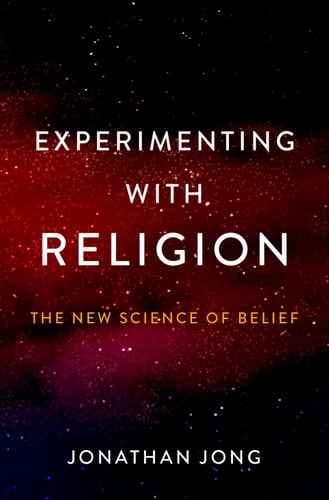
Experimenting with Religion: The New Science of Belief
0
0
As an Amazon Associate and affiliate partner, Menrva Books earns from qualifying purchases. Learn more
Author Description
Across history, our understanding of God, the soul, spirituality, and even science itself has shifted dramatically. Today, we have more scientific knowledge than ever, yet some age-old questions persist: Why do we believe in gods, souls, and rituals? Are these beliefs innate? Do existential fears drive us toward or away from religion? What can we learn about spirituality from children? How can we leverage scientific thinking to study spirituality?This book invites you into the labs and minds of some of the world's most renowned psychological scientists for an in-depth look at how psychologists can study religion and spirituality-and how they wrestle with doubts about ostensibly established findings and methods, even as the field advances. From China, India, Brazil, the United Kingdom, the United States, and Tuva, this book takes a balanced perspective on a diverse range of experiments and studies, casting a light on both their brilliance and their limitations. Ultimately, this book reveals that psychological experiments that test spiritual beliefs are works of imagination that can help us discover truths about the human mind's proclivity for religious ideas, as long as we can adapt and learn along the way.
Menrva's Summary
THE THESIS
This book investigates the intersection of psychological science and religious belief to determine how empirical methods can illuminate the origins and persistence of human spirituality. Jonathan Jong, a researcher in the psychology of religion, synthesizes global experimental data to examine why humans possess a proclivity for religious ideas. He argues that while scientific inquiry into the supernatural is fraught with methodological challenges, it remains a vital tool for understanding the cognitive mechanisms behind faith and existential anxiety.
THE SCOPE MAP
What You Will Find
- Cross-cultural experimental data from China, India, Brazil, the UK, the US, and Tuva
- Analysis of cognitive biases and developmental psychology regarding belief
- Critical evaluation of laboratory methodologies used to measure spiritual phenomena
Scope Limits
- Does not provide theological arguments for or against the existence of deities
- Does not offer a comprehensive history of world religions
THE AUTHORITY PERSPECTIVE
Experts recognize this work as a balanced introduction to the scientific study of religion, noting its transparency regarding the limitations of current psychological research. Readers frequently highlight the author's ability to translate complex experimental findings into accessible prose for a general audience.
Page Count:
198
Publication Date:
2023-01-01
Publisher:
Oxford University Press
ISBN-10:
0190875569
ISBN-13:
9780190875565
Non-Fiction
Psychology
Religion
Science
Theology Practical
Sociology
Community Tags
Similar Books