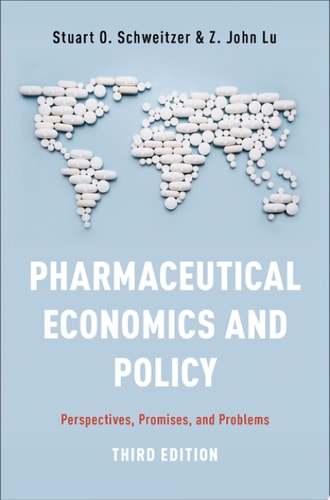
Pharmaceutical Economics and Policy: Perspectives, Promises, and Problems
0
0
As an Amazon Associate and affiliate partner, Menrva Books earns from qualifying purchases. Learn more
Author Description
Pharmaceuticals constitute a relatively small share of the total healthcare expenditure in most developed economies, and yet they play a critical role in the ongoing debate over how best to advance, improve, and afford healthcare. Despite this, and perhaps because of this, the industry has had, for many years, an outsized claim to fame and controversy, praise and criticisms, support and condemnation. Unfortunately, many participants in the debate do not fully understand the complexities of the industry and its role in the overall healthcare system. The analytical tools of economics provide a strong foundation for a better understanding of the dynamics of the pharmaceutical industry, its contribution to health and healthcare, its dual and often conflicting priorities of affordability and innovation, as well as the various private and public policy initiatives directed at the sector. This third edition of a uniquely comprehensive and balanced examination of the industry includes several new chapters on important topics such as the full-fledged generics sector, the arrival of biosimilars or generic biological drugs, the global consolidation of manufacturers, the evolving reimbursement landscape, and the emergence of the world's most populous nations, such as China, India, and Brazil, as both suppliers and consumers of pharmaceutical products. Other chapters have been fully rewritten or extensively updated, covering such important topics as the cost efficiency of research and development, pace of new innovations, economic evaluation and value-based pricing of drugs, and public and private interventions in the industry.
Menrva's Summary
THE THESIS
This text investigates the complex economic dynamics and policy challenges inherent in the global pharmaceutical industry, specifically balancing the competing demands of innovation and affordability. Stuart O. Schweitzer and Z. John Lu utilize economic theory and industry data to analyze how pharmaceutical products function within broader healthcare systems. The authors examine the incentives driving research and development, the impact of government interventions, and the shifting landscape of global supply and demand. By applying analytical economic tools, the book provides a framework for understanding the industry's role in public health and its controversial position in modern healthcare debates.
THE SCOPE MAP
What You Will Find
- Analysis of the generics sector and the emergence of biosimilars.
- Evaluation of research and development cost efficiency and innovation rates.
- Examination of global market shifts in China, India, and Brazil.
- Discussion of value-based pricing and reimbursement methodologies.
Scope Limits
- The text focuses primarily on economic and policy perspectives rather than clinical or pharmacological data.
- It does not provide a comprehensive history of individual drug development or specific medical breakthroughs.
THE AUTHORITY PERSPECTIVE
Experts recognize this work as a comprehensive resource for understanding the intersection of pharmaceutical economics and public policy. Readers frequently note the academic density of the prose, which makes it a suitable text for students and professionals seeking a structured analysis of the industry's regulatory and economic environment.
Page Count:
432
Publication Date:
2018-01-01
Publisher:
Oxford University Press
ISBN-10:
0190623802
ISBN-13:
9780190623807
Economics
Business
Medical
Healthcare Policy
Allied Health
Public Health
Pharmaceutical Industry
Community Tags
Similar Books