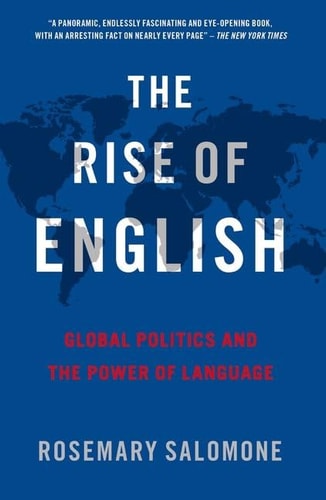
The Rise of English
0
0
As an Amazon Associate and affiliate partner, Menrva Books earns from qualifying purchases. Learn more
Author Description
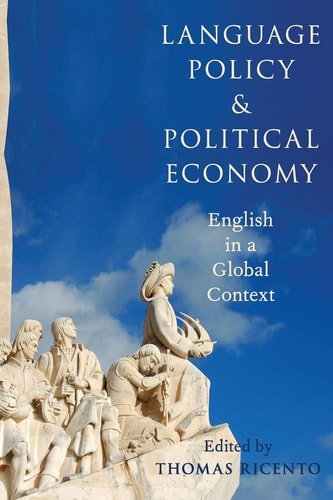
Is English A Bridge Or A Barrier To Economic Advancement And Social Mobility As It Spreads Worldwide? To What Extent Do Domestic And Global Politics Determine Those Outcomes? Who Are The Winners, Losers, And Resisters? How Are France And China Using The Soft Power Of Language To Overtake English And To What Ends? What Role Do Globalization, A Knowledge-based Economy, And Neoliberalism Play In These Developments? Using Education As Its Lens, This Book Critically Unpacks These And Related Questions In A Sweeping Journey Across Four Continents Through Diverse Political And Historical Settings. It Begins In Europe With The European Union And Its Promotion Of Multilingualism, And With Controversies Over English-taught Courses And Programs In Universities In The Name Of Internationalization. It Then Moves To The Post-colonial World Where Disputes Over English In The Schools Reveal Longstanding Grievances And The Inequities Of Historically Rooted And Politically Motivated Language Policies, And Where French Is Losing Its Hold To English In Some Former French-speaking Colonies. It Finally Shifts To The United States Where State And Local Officials And Grassroots Organizers Are Addressing The Foreign Language Deficit And Initiating Programs That Promote Multilingualism. Drawing On A Vast Store Of Interdisciplinary Research, Interviews, Court Decisions, Political Commentary, Literature, And Popular Culture From Across The Globe And In Multiple Languages, The Book Makes The Case For A Common Global Language (english For Now) As A Core Component Of Multilingualism In A World That Is Growing Smaller, More Diverse, And More Politically Uncertain By The Nanosecond-- Provided By Publisher.
Menrva's Summary
THE THESIS
This book investigates whether the global spread of English functions as a mechanism for social mobility or as a barrier to equity within diverse political and economic landscapes. Rosemary C. Salomone, a professor of law and expert in language policy, utilizes an interdisciplinary framework to examine how neoliberalism, globalization, and nationalistic soft power influence language education. She argues that while English serves as a necessary global lingua franca, it must be integrated into a broader commitment to multilingualism to mitigate historical inequities.
THE SCOPE MAP
What You Will Find
- Analysis of language policies within the European Union and its member states.
- Examination of post-colonial educational systems and the shift from French to English.
- Case studies on the foreign language deficit and multilingual initiatives in the United States.
- Integration of legal precedents, political discourse, and cultural commentary.
Scope Limits
- The text does not provide a comprehensive linguistic analysis of English grammar or syntax evolution.
- It does not offer a predictive model for the eventual replacement of English by another global language.
THE AUTHORITY PERSPECTIVE
Experts in sociolinguistics and education policy frequently cite this work for its expansive geographic scope and rigorous synthesis of interdisciplinary data. Readers note that the prose is academically dense, making it a substantial resource for scholars and policymakers interested in the intersection of language and power.
Page Count:
0
Publication Date:
2022-01-01
Publisher:
New York, NY : Oxford University Press,
ISBN-10:
0190625643
ISBN-13:
9780190625641
Non-Fiction
Political Aspects
Social Aspects
Globalization
Language and education
Education Policy
Community Tags
Similar Books