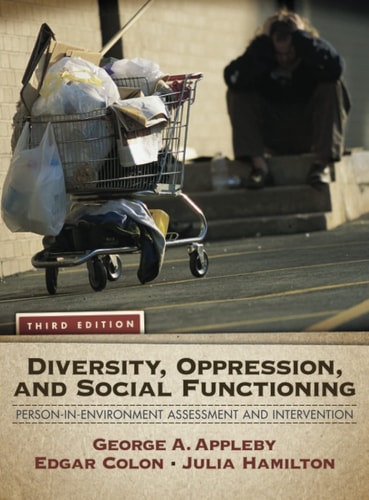
Diversity, Oppression, and Social Functioning: Person-In-Environment Assessment and Intervention
0
0
As an Amazon Associate and affiliate partner, Menrva Books earns from qualifying purchases. Learn more
Author Description
Using the “Person-In-Environment” (PIE) theoretical framework, this diversity practice text teaches students how to think about their personal reactions and assumptions about diversity and what constitutes cultural competent “assessment” and “intervention” when working with a broad range of diverse populations.The diverse populations presented in the text are described within an ecological, strengths perspective. The authors’ thesis is that, in order to work effectively with diverse populations, it is necessary to take into consideration the complex dynamics of social functioning and social oppression. The “Person-In-Environment” theoretical framework provides a basis for analysis of the social, economic, and political reality of these diverse populations. The text presents an affirmative practice approach and builds on the available diversity practice literature.This text can be used in diversity practice courses, courses on working with oppressed populations, and other practice courses (such as advanced practice) that focus on diversity issues.
Menrva's Summary
THE THESIS
This text investigates how the Person-In-Environment (PIE) framework can be utilized to improve cultural competence and social work practice when engaging with diverse and oppressed populations. George A. Appleby draws upon ecological and strengths-based perspectives to argue that effective intervention requires a deep understanding of the intersection between individual social functioning and broader systemic oppression. The work provides a structured analytical approach for practitioners to examine their own biases while navigating the complex political and economic realities faced by their clients.
THE SCOPE MAP
What You Will Find
- Application of the Person-In-Environment (PIE) theoretical framework to clinical practice.
- Strategies for self-reflection regarding personal assumptions and cultural biases.
- Analysis of the intersection between social functioning and systemic oppression.
- Affirmative practice methodologies for working with a wide range of diverse populations.
THE AUTHORITY PERSPECTIVE
The subject matter points to a dense, academic resource intended for social work students and practitioners seeking a structured, theoretical approach to diversity training. The framing suggests a focus on professional development and clinical methodology rather than a general-interest overview of social issues.
Page Count:
320
Publication Date:
2010-06-30
Publisher:
Pearson
ISBN-10:
0205787290
ISBN-13:
9780205787296
Psychology
Social Work
Social justice
Sociology
Education
Diversity
Community Tags
Similar Books