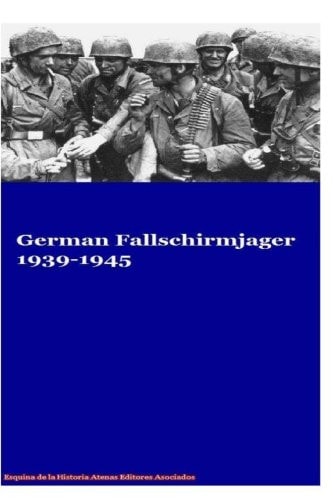
German Fallschirmjäger 1939-1945
0
0
As an Amazon Associate and affiliate partner, Menrva Books earns from qualifying purchases. Learn more
Author Description
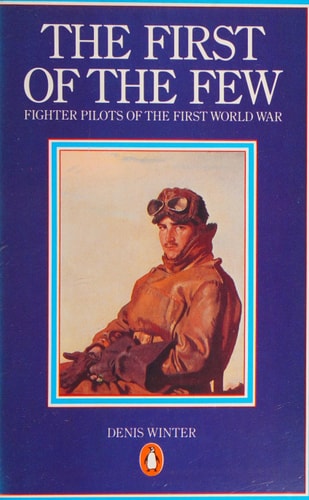
With the outbreak of World War I in August 1914 the importance of aerial warfare was initially overlooked. The general staffs of the combatant nations considered it a toy of dubious use, and those in the infant air services were looked upon as "backsliders" who had found a way of avoiding "real" action. Speaking as Commander-in-Chief, Aldershot, just one month before the outbreak of war, for example, Sir Douglas Haig, later commander of the British Expeditionary Force, told a military gathering: "I hope none of you gentlemen is so foolish as to think that aeroplanes will be able to be usefully employed for reconnaissance in the air. There is only one way for a commander to get information by reconnaissance and that is by the use of cavalry." The British Royal Flying Corps (RFC) went to war with just 197 pilots. Two weeks later Sefton Brancker, Director General of Military Aeronautics, compiled a list of all those left in the country able to fly, and discovered that only 862 men held the Royal Aero Club's certificate. Of these, just 55 were sufficiently advanced to undertake active service immediately. Such meagre resources were considered no great handicap, however, as each side discounted aerial combat (no aircraft mounted any guns) and thus any losses were expected to be small. By the summer of 1915, there were only 200 pilots undergoing training in Great Britain and so it was assumed that weekend gentlemen aviators would top up the supply. In its wisdom the War Office decreed that "members of the RFC who own their own aeroplanes should be encouraged to bring them to the Central Flying School when they undergo their training". In addition, before RFC acceptance all the candidates had to obtain the necessary Aero Club certificate of competence, and had to pay the £75 fee. Entry qualifications to the RFC were eccentric: individuals were asked if they could ride a horse, a motorcycle or sail a boat. Then, after picking out strands of differently coloured wools, indiv
Menrva's Summary
THE THESIS
This book investigates the operational history and combat effectiveness of German Fallschirmjäger (paratroopers) during World War II. It details their formation, training, equipment, and key deployments from the invasion of Poland to the final battles of the war. The work aims to provide a comprehensive overview of this elite airborne force.
THE SCOPE MAP
- The origins and development of the Fallschirmjäger corps.
- Detailed accounts of their participation in major campaigns, including Crete, North Africa, and Italy.
- Analysis of their specialized equipment, tactics, and weaponry.
- Examination of their role in both offensive and defensive operations.
- Biographies of key commanders and notable units.
- The eventual decline and disbandment of the Fallschirmjäger.
THE AUTHORITY PERSPECTIVE
The book is likely to be of interest to military history enthusiasts, particularly those focused on World War II and airborne operations. Its detailed approach to the Fallschirmjäger suggests it aims to be a thorough reference for the subject. The scope indicates a comprehensive study intended for readers seeking in-depth knowledge of this specific military branch.
Page Count:
144
Publication Date:
2013-03-12
Publisher:
CreateSpace Independent Publishing Platform
ISBN-10:
1537779885
ISBN-13:
9781537779881
History
Non-Fiction
Military History
Aviation History
Community Tags
Similar Books