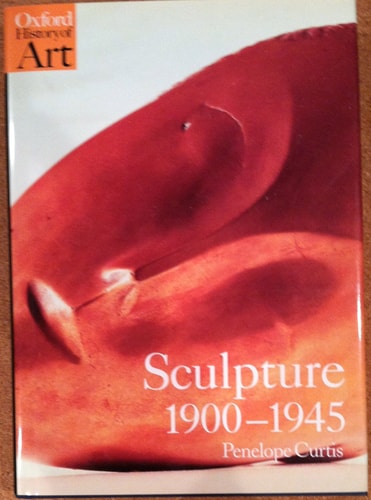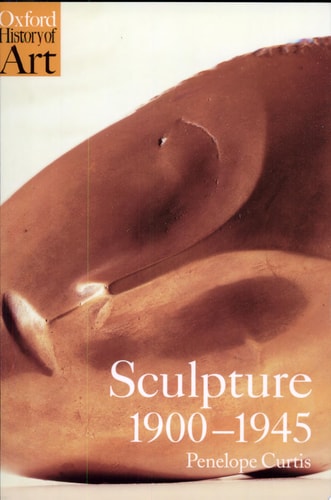
Sculpture 1900-1945
0
0
As an Amazon Associate and affiliate partner, Menrva Books earns from qualifying purchases. Learn more
Author Description
Sculpture 1900-1945 provides a new critical analysis of the fascinating development of sculpture in Europe and America during this important period in art history. The most comprehensive concise history of modern sculpture available, this account puts sculpture back into relation with a range of other phenomena, encompassing many kinds of architects, sculptors, and painters, with widely differing kinds of practices. Penelope Curtis takes Rodin as her point of departure and recurrent point of reference, building a story that necessarily begins in Paris, the major artistic center of the era, and evolves around responses to Rodin by sculptors in France, Germany, Britain, and America. She charts the key developments in the practice and reception of a wide variety of sculpture, from the avant-garde to public monuments. Covering all the major figures, including Duchamp, Le Corbusier, Dali, El Lissitzsky, Brancusi, Henry Moore, and Barbara Hepworth, Sculpture 1900-1945 focuses on specific themes in each chapter, ranging from the public place of sculpture, to the private arena, to the figurative ideal. Filling a gap in the literature, Sculpture 1900-1945 is the only critically up-to-date book on the subject.
Menrva's Summary
THE THESIS
This book offers a critical analysis of the evolution of sculpture in Europe and America from 1900 to 1945. Penelope Curtis uses Auguste Rodin as a central reference point to trace the development of modern sculpture, beginning in Paris and expanding to encompass responses to Rodin by artists across France, Germany, Britain, and America. The book examines key shifts in the practice and reception of diverse sculptural forms, from avant-garde pieces to public monuments, integrating a wide array of artists and their varied artistic approaches.
THE SCOPE MAP
- A critical analysis of sculpture's development in Europe and America between 1900 and 1945.
- Rodin as a point of departure and recurrent reference for understanding modern sculpture.
- Exploration of sculptural responses to Rodin by artists in France, Germany, Britain, and America.
- Coverage of key figures including Duchamp, Le Corbusier, Dali, El Lissitzsky, Brancusi, Henry Moore, and Barbara Hepworth.
- Thematic chapters focusing on the public place of sculpture, the private arena, and the figurative ideal.
- Integration of sculpture with other artistic phenomena, including painting and architecture.
THE AUTHORITY PERSPECTIVE
This book is recognized as a comprehensive and critically up-to-date account of modern sculpture, filling a notable gap in art historical literature. It is valued for its ability to place sculpture in relation to a broader range of artistic and cultural phenomena. The author's approach, using Rodin as a central figure, allows for a nuanced exploration of the period's diverse sculptural practices and their reception across different national contexts. The thematic organization further enhances its utility for understanding specific aspects of sculpture's evolution.
Page Count:
286
Publication Date:
1999-01-01
Publisher:
Oxford University Press
ISBN-10:
0192842285
ISBN-13:
9780192842282
History
Art
Non-Fiction
American Art
Modern Art
European Art
Art History
Sculpture
Community Tags
Similar Books