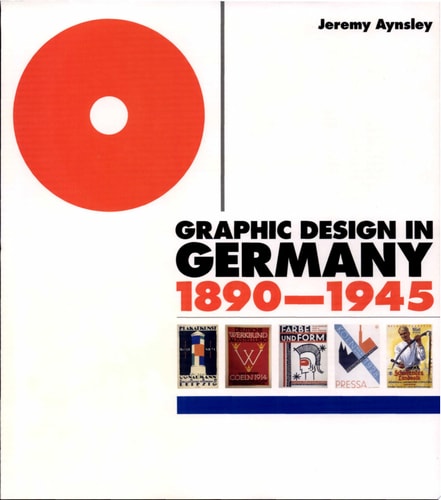
Graphic Design in Germany 1890-1945
0
0
As an Amazon Associate and affiliate partner, Menrva Books earns from qualifying purchases. Learn more
Author Description
German graphic and typographic design in the first half of the twentieth century represents an extraordinarily rich and diverse aspect of the history of visual culture. It marks the moment of recognition that the world was becoming increasingly dependent on a modern and commercialized system of communication in which the designer was to play a major role. An unprecedented scale of attention was devoted to printed matter, whether as designs for graphic ornament, typefaces and logos in books and advertisements, or magazines, posters, signage, and exhibitions. Jeremy Aynsley has written the first account in English of the emergence of German graphic design between 1890 and 1945. Based on many years of research and original material, this handsome book is lavishly illustrated with examples from across a stylistically varied field. There were many good reasons for Germany to lead in the field of print culture. Historically it was a country that had been associated since the Middle Ages with the arts of the book and printing, and many of the new design developments in the twentieth century grew from that base. The spectacular industrial and commercial boom following the Franco-Prussian War, when the Germans became world competitors, stimulated interest in the field of advertising, whether in newspapers, journals, or on sidewalk kiosks. Perhaps borrowing in the beginning from the Arts and Crafts movement in Britain, Art Nouveau in France, and the advanced advertising designers in the U.S., the German artists soon developed a style of their own that was aggressive, aesthetically adventurous, and well constructed to attract customers. While some of the individual designers such as Peter Behrens, Lucian Bernhard, Jan Tschichold, Herbert Bayer, and John Heartfield are well known, many others have not received such attention. Aynsley provides an amazingly well-rounded picture of this burst of innovation that changed the face of modern life, as well as of the p
Menrva's Summary
THE THESIS
This book investigates the emergence and evolution of German graphic and typographic design during a pivotal period of modernization and commercialization from 1890 to 1945. Jeremy Aynsley, drawing on extensive research and original materials, presents the first comprehensive account in English of this subject, exploring how Germany became a leader in print culture. The work examines the interplay between historical traditions of printing, industrial growth, and the development of a distinctively German visual style that was both commercially effective and artistically adventurous.
THE SCOPE MAP
- Coverage of German graphic and typographic design from 1890 to 1945.
- Analysis of the role of design in a modern, commercialized communication system.
- Examples of printed matter including graphic ornament, typefaces, logos, advertisements, magazines, posters, signage, and exhibition designs.
- Discussion of the historical context, including Germany's long association with printing and the impact of industrial and commercial booms.
- Exploration of influences from movements like Arts and Crafts and Art Nouveau, and American advertising design.
- Profiles of key designers such as Peter Behrens, Lucian Bernhard, Jan Tschichold, Herbert Bayer, and John Heartfield, alongside lesser-known figures.
- Lavishly illustrated examples showcasing a stylistically varied field.
THE AUTHORITY PERSPECTIVE
This book is regarded as a seminal work, offering the first in-depth English-language survey of German graphic design between 1890 and 1945. It is praised for its extensive research, original material, and rich illustration, providing a well-rounded picture of a significant period in visual culture. The work is noted for its detailed examination of the historical, industrial, and artistic factors that shaped German design, making it a valuable resource for understanding the development of modern communication and advertising.
Page Count:
240
Publication Date:
2000-01-01
Publisher:
University of California Press
ISBN-10:
0520227964
ISBN-13:
9780520227965
Non-Fiction
History
Typography
Advertising history
Visual Culture
Graphic Design
Community Tags
Other Editions(2)

Similar Books










Reader Comments
Share Your Thoughts
No comments yet. Be the first to share your thoughts!