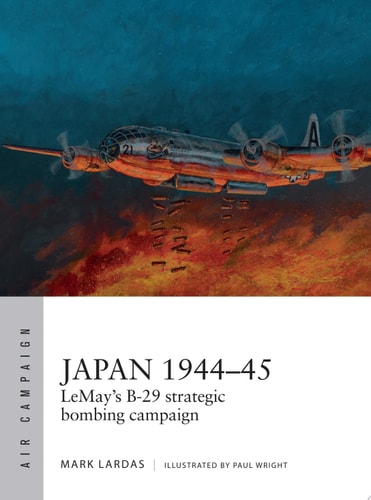
Japan 1944–45
0
0
As an Amazon Associate and affiliate partner, Menrva Books earns from qualifying purchases. Learn more
Author Description
The air campaign that incinerated Japan's cities was the first and only time that independent air power has won a war. As the United States pushed Imperial Japan back towards Tokyo Bay, the US Army Air Force deployed the first of a new bomber to the theater. The B-29 Superfortress was complex, troubled, and hugely advanced. It was the most expensive weapons system of the war, and formidably capable. But at the time, no strategic bombing campaign had ever brought about a nation's surrender. Not only that, but Japan was half a world away, and the US had no airfields even within the extraordinary range of the B-29. This analysis explains why the B-29s struggled at first, and how General LeMay devised radical and devastating tactics that began to systematically incinerate Japanese cities and industries and eliminate its maritime trade with aerial mining. It explains how and why this campaign was so uniquely successful, and how gaps in Japan's defences contributed to the B-29s' success.
Menrva's Summary
THE THESIS
The air campaign that incinerated Japan's cities was the first and only time that independent air power has won a war. The United States Army Air Force deployed the B-29 Superfortress, a complex and advanced bomber, to the Pacific theater. Despite initial struggles and the unprecedented challenge of bringing a nation to surrender through strategic bombing, this analysis explains how General LeMay devised radical tactics. These tactics systematically incinerated Japanese cities and industries, eliminated maritime trade through aerial mining, and ultimately contributed to the campaign's unique success, aided by gaps in Japan's defenses.
THE SCOPE MAP
- The deployment and initial challenges of the B-29 Superfortress in the Pacific theater.
- The strategic bombing campaign against Japanese cities and industries.
- The development and implementation of radical tactics by General LeMay.
- The role of aerial mining in eliminating Japan's maritime trade.
- Analysis of the factors contributing to the campaign's success, including Japanese defensive weaknesses.
THE AUTHORITY PERSPECTIVE
This book analyzes the strategic air campaign against Japan in 1944-45, focusing on the B-29 Superfortress and the tactics employed by General LeMay. The work details how independent air power is argued to have won the war, examining the systematic incineration of Japanese cities and the elimination of maritime trade. It also explores the initial struggles and eventual success of the campaign, attributing it in part to gaps in Japan's defenses. The analysis aims to explain the unique effectiveness of this particular strategic bombing effort.
Page Count:
96
Publication Date:
2019-02-21
Publisher:
Bloomsbury UK
ISBN-10:
1472832485
ISBN-13:
9781472832481
History
Non-Fiction
Aviation History
Military History
Community Tags
Similar Books