Understanding Zimbabwe: From Liberation to Authoritarianism
0
0
As an Amazon Associate and affiliate partner, Menrva Books earns from qualifying purchases. Learn more
Author Description
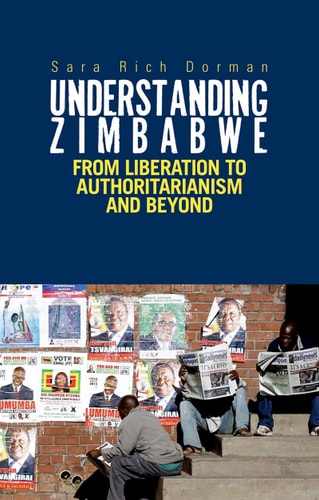
Zimbabwe's recent history has been shaped by battles about who speaks for the nation, one fought out in struggles for control of political institutions, the media, and civil society. In her book Sara Rich Dorman examines the interactions of social groups - churches, NGOs, and political parties - from the liberation struggle, through the independence decades, as they engaged the state and ruling party. Her empirically rich account reveals how strategies of control and co-option were replicated and resisted, shaping expectations and behaviour.Dorman tracks how the relationship between Mugabe's ruling party and activists was determined by the liberation struggle, explaining how electoral machinery, the judiciary, and other institutions of state control ensured ZANU-PF hegemony, even as other forces in Zimbabwean society demanded accountability and representation.This is a story of ambiguity and complexity in which the state and civil society mimic and learn from each other. We learn how both structural and direct violence are deployed by the regime, but also how ad-hoc and unplanned many of their interventions really were. Even as the liberation war generation reluctantly exits the Zimbabwean political stage, their influence continues to shape interaction between citizens and the state.
Menrva's Summary
THE THESIS
This book investigates how the legacy of the liberation struggle and the subsequent interactions between civil society and the state facilitated the rise of authoritarianism in Zimbabwe. Sara Rich Dorman, a scholar specializing in African politics, utilizes extensive empirical research to analyze the power dynamics between the ruling ZANU-PF party and various social institutions. She argues that the strategies of control, co-option, and resistance developed during the independence era fundamentally shaped the institutional landscape and political behavior of the nation.
THE SCOPE MAP
What You Will Find
- Analysis of the relationship between the ruling party and social groups including churches, NGOs, and political parties.
- Examination of state mechanisms such as electoral machinery and the judiciary used to maintain hegemony.
- Historical overview of Zimbabwean political development from the liberation struggle through the post-independence decades.
Scope Limits
- The text focuses primarily on the institutional and social interactions within Zimbabwe and does not provide an exhaustive biography of individual political leaders.
- It does not cover the most recent post-Mugabe developments in detail, focusing instead on the structural foundations established during his tenure.
THE AUTHORITY PERSPECTIVE
Scholars and political analysts recognize this work as a rigorous examination of the complex relationship between the Zimbabwean state and civil society. Readers frequently note the academic density of the prose, which provides a nuanced understanding of how authoritarian structures are maintained and resisted over time.
Page Count:
360
Publication Date:
2016-10-01
Publisher:
Oxford University Press
ISBN-10:
019063488X
ISBN-13:
9780190634889
History
Sociology
Politics & Government
Zimbabwe
Government
Community Tags
Similar Books