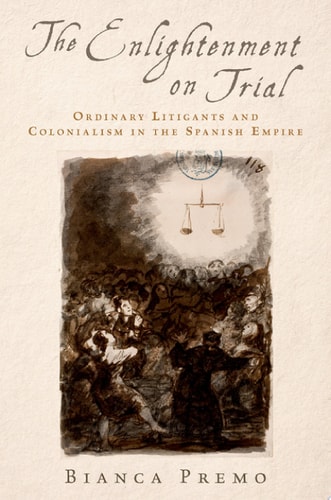
The Enlightenment on Trial
0
0
As an Amazon Associate and affiliate partner, Menrva Books earns from qualifying purchases. Learn more
Author Description
This Is A History Of The Enlightenment--the Rights-oriented, Formalist, Secularizing, Freedom-inspired Eighteenth-century Movement That Defined Modern Western Law. But Rather Than Members Of A Cosmopolitan Republic Of Letters, Its Principal Protagonists Are Non-literate, Poor, And Enslaved Litigants Who Sued Their Superiors In The Royal Courts Of Spain's American Colonies. Despite Growing Evidence Of The Hispanic World's Contributions To Enlightenment Science, The Writing Of History, And Statecraft, The Region Is Conventionally Believed To Have Taken An Alternate Route To Modernity. This Book Grapples With The Contradiction Between This Legacy And Eighteenth-century Spanish Americans' Active Production Of Concepts Fundamental To Modern Law. The Enlightenment On Trial Offers Readers New Insight Into How Spanish Imperial Subjects Created Legal Documents, Fresh Interpretations Of The Intellectual Transformations And Legal Reform Policies Of The Period, And Comparative Analysis Of The Volume Of Civil Suits From Six Regions In Mexico, Peru And Spain. Ordinary Litigants In The Colonies--far More Often Than Peninsular Spaniards--sued Superiors At An Accelerating Pace In The Second Half Of The Eighteenth Century. Three Types Of Cases Increased Even Faster Than A Stunning General Rise Of Civil Suits In The Colonies: Those That Slaves, Native Peasants And Women Initiated Against Masters, Native Leaders And Husbands. As They Entered Court, These Litigants Advanced A New Law-centered Culture Distinct From The Casuistic, Justice-oriented Legal Culture Of The Early Modern Period. And They Did So At Precisely The Same Time That A Few Bright Minds Of Europe Enshrined New Ideas In Print. The Conclusion Considers Why, If This Is So, The Spanish Empire Has Remained Marginal To The Story Of The Advent Of The Modern West.
Menrva's Summary
THE THESIS
This book investigates the contradiction between the conventional exclusion of the Spanish Empire from the history of the Enlightenment and the active role of colonial subjects in shaping modern legal concepts. Bianca Premo, a historian specializing in colonial Latin America, utilizes extensive archival research from royal courts to challenge the narrative that modernity was an exclusively European intellectual development. By analyzing the legal actions of non-literate, poor, and enslaved litigants, she argues that these individuals were not passive recipients of policy but active producers of a new, law-centered culture.
THE SCOPE MAP
What You Will Find
- Comparative analysis of civil litigation volumes across six regions in Mexico, Peru, and Spain.
- Examination of legal documents initiated by enslaved people, native peasants, and women against their superiors.
- A framework for understanding the transition from casuistic, justice-oriented legal systems to modern, law-centered cultures.
Scope Limits
- The analysis focuses primarily on the second half of the eighteenth century within the Spanish imperial context.
- The study does not provide a comprehensive history of European Enlightenment philosophy, focusing instead on its practical application in colonial courts.
THE AUTHORITY PERSPECTIVE
Scholars in the field of colonial legal history identify this work as a significant intervention that decentralizes the traditional European-centric narrative of the Enlightenment. Readers frequently note the academic density of the prose, which is supported by rigorous archival evidence and detailed statistical analysis of court records.
Page Count:
336
Publication Date:
2017-01-01
Publisher:
Oxford University Press
ISBN-10:
0190638745
ISBN-13:
9780190638740
History
Sociology of Law
American History
Enlightenment
Legal History
Community Tags
Similar Books