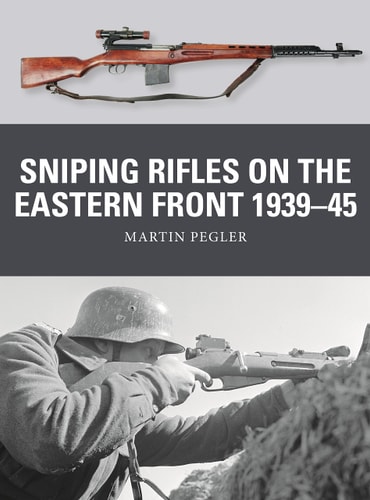
Sniping Rifles on the Eastern Front 1939–45
0
0
As an Amazon Associate and affiliate partner, Menrva Books earns from qualifying purchases. Learn more
Author Description
Fully illustrated, this absorbing study investigates the development of sniping weapons and techniques on World War II's Eastern Front. The Soviet Union had developed a significant sniping force by 1939, but the extraordinary skill and cunning displayed by Finnish snipers during the Winter War forced the Soviets to innovate. On the other side, German sniping suffered from a lack of standardization of weapons and a lack of marksmen deployed at the start of the Great Patriotic War (1941–45). There were few heroes in the conflict, but on both sides, the snipers were idolized – especially on the Soviet side gaining almost mythical status. As well as traditional bolt-action weapons, both sides used several types of semi-automatic rifle, such as the SVT-38 and the Gew 41. Offering greater firepower at the expense of long-range accuracy, such weapons would be profoundly influential in the postwar world.
Menrva's Summary
THE THESIS
This study investigates the development and impact of sniping weapons and techniques on the Eastern Front during World War II, focusing on the innovations spurred by conflict and the unique status of snipers in Soviet and German forces.
THE SCOPE MAP
- The evolution of Soviet sniping tactics and weaponry in response to Finnish expertise.
- The challenges faced by German snipers, including weapon standardization and marksmanship.
- The role and perception of snipers, particularly their near-mythical status in the Soviet Union.
- Analysis of both bolt-action and semi-automatic rifles used, such as the SVT-38 and Gew 41, and their postwar influence.
THE AUTHORITY PERSPECTIVE
This work is recognized for its detailed examination of a specific, often romanticized, aspect of World War II's Eastern Front. The author's focus on the technical development of sniping arms and the tactical innovations driven by combat provides a specialized lens on the conflict. It offers insights into the strategic importance and cultural impact of snipers, particularly within the Soviet military apparatus.
Page Count:
80
Publication Date:
2019-03-19
Publisher:
Bloomsbury USA
ISBN-10:
1472825896
ISBN-13:
9781472825896
History
Non-Fiction
Tactics
Firearms
Military History
Community Tags
Similar Books