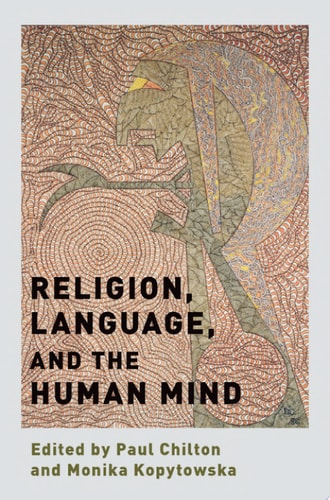
Religion, Language, and the Human Mind
0
0
As an Amazon Associate and affiliate partner, Menrva Books earns from qualifying purchases. Learn more
Author Description
What is religion? How does it work? Many natural abilities of the human mind are involved, and crucial among them is the ability to use language. This volume brings together research from linguistics, cognitive science and neuroscience, as well as from religious studies, to understand the phenomena of religion as a distinctly human enterprise.The book is divided into three parts, each part preceded by a full introductory chapter by the editors that discusses modern scientific approaches to religion and the application of modern linguistics, particularly cognitive linguistics and pragmatics. Part I surveys the development of modern studies of religious language and the diverse disciplinary strands that have emerged. Beginning with descriptive approaches to religious language and the problem of describing religious concepts across languages, chapters introduce the turn to cognition in linguistics and also in theology, and explore the brain's contrasting capacities, in particular its capacity for language and metaphor.Part II continues the discussion of metaphor - the natural ability by which humans draw on basic knowledge of the world in order to explore abstractions and intangibles. Specialists in particular religions apply conceptual metaphor theory in various ways, covering several major religious traditions-Buddhism, Christianity, Hinduism, Islam and Judaism.Part III seeks to open up new horizons for cognitive-linguistic research on religion, looking beyond written texts to the ways in which language is integrated with other modalities, including ritual, religious art, and religious electronic media. Chapters in Part III introduce readers to a range of technical instruments that have been developed within cognitive linguistics and discourse analysis in recent years. What unfolds ultimately is the idea that the embodied cognition of humans is the basis not only of their languages, but also of their religions.
Menrva's Summary
THE THESIS
This volume investigates the intersection of human cognitive architecture, linguistic capacity, and religious expression to determine how religion functions as a distinctly human enterprise. Editors Monika Kopytowska and Paul A. Chilton synthesize research from linguistics, neuroscience, and religious studies to argue that embodied cognition serves as the foundational mechanism for both language and religious belief. The text provides a structured framework for analyzing how humans utilize metaphor and discourse to conceptualize the abstract and intangible aspects of religious experience.
THE SCOPE MAP
What You Will Find
- Conceptual metaphor theory applied to Buddhism, Christianity, Hinduism, Islam, and Judaism.
- Methodologies for analyzing religious language through cognitive linguistics and pragmatics.
- Research on the integration of language with ritual, religious art, and electronic media.
Scope Limits
- The text does not provide a comprehensive historical survey of all world religions.
- It does not offer a theological defense or critique of specific religious doctrines.
THE AUTHORITY PERSPECTIVE
Experts identify this volume as a significant interdisciplinary resource for scholars interested in the cognitive foundations of religious discourse. Readers frequently note the academic density of the prose, which requires a foundational understanding of linguistics and cognitive science to fully engage with the presented arguments.
Page Count:
536
Publication Date:
2018-05-01
Publisher:
Oxford University Press
ISBN-10:
0190636645
ISBN-13:
9780190636647
Discourse Analysis
Philosophy of
Linguistics
Neuroscience
Community Tags
Similar Books