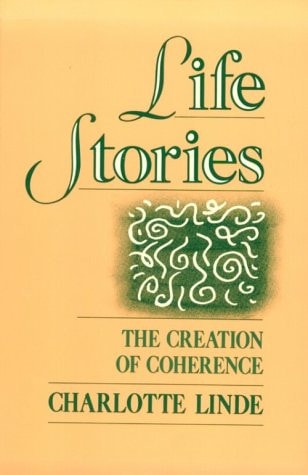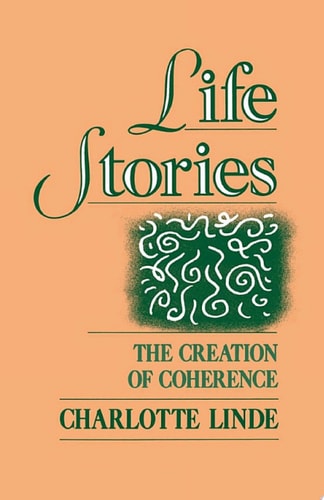
Life Stories: The Creation of Coherence
0
0
As an Amazon Associate and affiliate partner, Menrva Books earns from qualifying purchases. Learn more
Author Description
All adult speakers in Western cultures have life stories argues Charlotte Linde, and the ways in which these life stories are formed and exchanged with others have a powerful effect on all of us. Life stories express our sense of self, who we are and how we got that way. According to Linde, we also use these stories to show that our lives can be understood as coherent, and to assert or negotiate group membership. These life stories take part in the highest level of social constructions, since they are built on cultural assumptions about what is expected in a life, what the norms for a successful life are, and what common or special belief systems are necessary to establish coherence. The life story, illuminated by this engrossing study, is a form of everyday discourse which has not previously been precisely defined or studied. It is an oral, discontinuous unit, consisting of stories which are retold in a variety of forms over a long period of time, and which may be revised and changed as the speaker comes to drop old meanings and add new ones to parts of the life story. The life story is a particularly rich and important area for study, because it represents a crossroads of linguistic structure and social practice. Linde's analysis is of importance to linguistics, as well as having broader implications for anthropology, psychology, and sociology.
Menrva's Summary
THE THESIS
This book investigates how adult speakers construct and maintain coherent life stories as a fundamental form of everyday discourse. Charlotte Linde, a researcher in linguistics, utilizes a sociolinguistic framework to analyze how individuals use narrative to negotiate identity, group membership, and cultural norms. By examining the oral and discontinuous nature of these stories, the author argues that life narratives serve as a critical intersection between linguistic structure and social practice.
THE SCOPE MAP
What You Will Find
- Analysis of life stories as a specific unit of discourse
- Examination of the relationship between personal narrative and cultural belief systems
- Exploration of how life stories are revised and adapted over time
Scope Limits
- Does not provide a comprehensive psychological clinical guide for therapy
- Focuses primarily on Western cultural contexts
THE AUTHORITY PERSPECTIVE
Experts recognize this work as a foundational text for understanding the intersection of narrative discourse and social identity. Readers frequently note the academic density of the prose, which is tailored for scholars in linguistics, anthropology, and sociology.
Page Count:
250
Publication Date:
1993-01-01
Publisher:
Oxford University Press
ISBN-10:
0190281871
ISBN-13:
9780190281878
Politics
Psychology
Anthropology
Words Language & Grammar
Categories
Linguistics
Public Policy
Economic Policy & Development
Reference
Kindle Store
Communication Studies
Discourse Analysis
Kindle eBooks
Criticism & Theory
Sociology