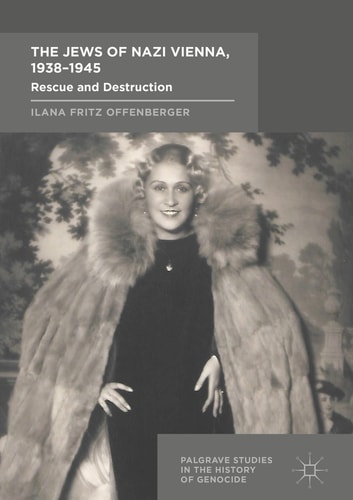
The Jews of Nazi Vienna, 1938-1945
0
0
As an Amazon Associate and affiliate partner, Menrva Books earns from qualifying purchases. Learn more
Author Description
This book examines Jewish life in Vienna just after the Nazi-takeover in 1938. Who were Vienna’s Jews, how did they react and respond to Nazism, and why? Drawing upon the voices of the individuals and families who lived during this time, together with new archival documentation, Ilana Offenberger reconstructs the daily lives of Vienna’s Jews from Anschluss in March 1938 through the entire Nazi occupation and the eventual dissolution of the Jewish community of Vienna. Offenberger explains how and why over two-thirds of the Jewish community emigrated from the country, while one-third remained trapped. A vivid picture emerges of the co-dependent relationship this community developed with their German masters, and the false hope they maintained until the bitter end. The Germans murdered close to one third of Vienna’s Jewish population in the “final solution” and their family members who escaped the Reich before 1941 chose never to return; they remained dispersed across the world. This is not a triumphant history. Although the overwhelming majority survived the Holocaust, the Jewish community that once existed was destroyed.
Menrva's Summary
THE THESIS
This book investigates the complex and often tragic experiences of Vienna's Jewish population in the immediate aftermath of the Nazi takeover and throughout the occupation. Drawing on individual testimonies and new archival evidence, Ilana Offenberger details the daily lives of Viennese Jews from the Anschluss in March 1938 until the dissolution of the community. The work explains the emigration of over two-thirds of the community while one-third remained, detailing the co-dependent relationship that developed with their German occupiers and the false hopes they clung to.
THE SCOPE MAP
- Analysis of Jewish life in Vienna following the 1938 Nazi takeover.
- Reconstruction of daily lives through individual voices and archival documentation.
- Explanation for the emigration of over two-thirds of the Jewish community.
- Examination of the co-dependent relationship between Viennese Jews and their Nazi occupiers.
- Details on the fate of the one-third of the Jewish population who remained in Vienna.
- Exploration of the false hope maintained by the community until the end of the occupation.
- Discussion of the destruction of the Jewish community and the dispersal of survivors globally.
THE AUTHORITY PERSPECTIVE
The book is a detailed historical account that reconstructs the daily lives of Vienna's Jews during the Nazi occupation, drawing on personal accounts and archival research. It focuses on the community's reactions to Nazism, the reasons behind mass emigration, and the difficult relationship with their occupiers. The narrative highlights the ultimate destruction of the community, with a significant portion murdered and survivors dispersed worldwide. The work is presented as a somber history, emphasizing survival rather than triumph.
Page Count:
321
Publication Date:
2017-05-11
Publisher:
Springer Nature
ISBN-10:
3319493582
ISBN-13:
9783319493589
History
Non-Fiction
Social History
Jewish History
European History
Jewish Studies
Community Tags
Similar Books