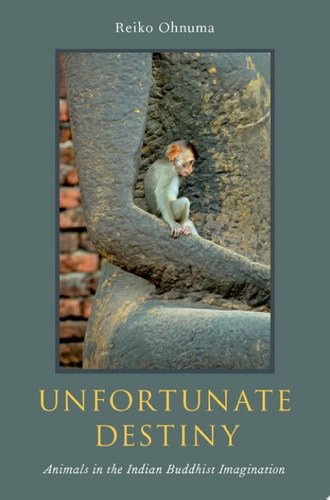
Unfortunate Destiny: Animals in the Indian Buddhist Imagination
0
0
As an Amazon Associate and affiliate partner, Menrva Books earns from qualifying purchases. Learn more
Author Description
Unfortunate Destiny Focuses On The Roles Played By Non-human Animals Within The Imaginative Thought-world Of Indian Buddhism, As Reflected In Pre-modern South Asian Buddhist Literature. These Roles Are Multifaceted, Diverse, And Often Contradictory: In Buddhist Doctrine And Cosmology, The Animal Rebirth Is A Most Unfortunate Destiny (durgati), Won Through Negative Karma And Characterized By A Lack Of Intelligence, Moral Agency, And Spiritual Potential. In Stories About The Buddha's Previous Lives, On The Other Hand, We Find Highly Anthropomorphized Animals Who Are Wise, Virtuous, Endowed With Human Speech, And Often Critical Of The Moral Shortcomings Of Humankind. In The Life-story Of The Buddha, Certain Animal Characters Serve As Doubles Of The Buddha, Illuminating His Nature Through Identification, Contrast Or Parallelism With An Animal Other. Relations Between Human Beings And Animals Likewise Range All The Way From Support, Friendship, And Near-equality To Rampant Exploitation, Cruelty, And Abuse. Perhaps The Only Commonality Among These Various Strands Of Thought Is A Persistent Impulse To Use Animals To Clarify The Nature Of Humanity Itself - Whether Through Similarity, Contrast, Or Counterpoint. Buddhism Is A Profoundly Human-centered Religious Tradition, Yet It Relies Upon A Dexterous Use Of The Animal Other To Help Clarify The Human Self. Through A Wide-ranging Exploration Of Animal Imagery, Animal Discourse, And Specific Animal Characters In South Asian Buddhist Texts, Unfortunate Destiny Seeks To Make Sense Of This Process.
Menrva's Summary
THE THESIS
This work investigates how non-human animals function as symbolic and narrative tools within the Indian Buddhist imagination to define the boundaries and nature of humanity. Reiko Ohnuma, a scholar of South Asian religions, utilizes a wide array of pre-modern Buddhist literature to analyze the paradox of the animal in Buddhist thought. She argues that while animals are doctrinally relegated to a state of unfortunate rebirth, they are simultaneously employed as sophisticated mirrors, moral exemplars, and doubles for the Buddha himself.
THE SCOPE MAP
What You Will Find
- Analysis of animal imagery and discourse in the Pali Jatakas and the Divyavadana.
- Examination of the animal as a moral agent and a foil for human behavior.
- Exploration of the Buddha's previous lives and the role of animal characters in his life-story.
Scope Limits
- The study focuses exclusively on pre-modern South Asian Buddhist texts.
- It does not provide a comprehensive history of animal ethics in modern Buddhist practice.
THE AUTHORITY PERSPECTIVE
Scholars in the field of religious studies recognize this text as a significant contribution to the intersection of animal studies and Buddhist philosophy. Readers frequently note the academic density of the prose and the meticulous nature of the textual analysis provided by the author.
Page Count:
288
Publication Date:
2017-06-01
Publisher:
Oxford University Press, Incorporated
ISBN-10:
0190637552
ISBN-13:
9780190637552
Religion
Philosophy
Buddhism india
In literature
Asian Studies
Religious Aspects
Animal Studies
Cultural History
Buddhism
Community Tags
Other Editions(2)
Similar Books