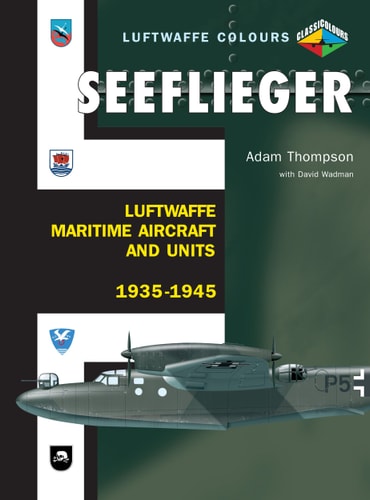
Seeflieger: Luftwaffe Maritime Aircraft and Units 1935-1945
0
0
As an Amazon Associate and affiliate partner, Menrva Books earns from qualifying purchases. Learn more
Author Description
On 5th and 6th June 1944 the greatest invasion force ever assembled left the shores of Britain in preparation for the D-Day assault against Hitler's Atlantic Wall in France. The campaign to liberate Western Europe from the Nazis was about to begin. Allied forces landed on five beaches in Normandy, whose names, Gold, Sword, Juno, Omaha and Utah, still resonate more than 60 years after the invasion. However, had the Allies simply relied on landing at these five locations then the success of the invasion was more uncertain. Linked into the main D-Day landings were a number of further raids and parachute drops aimed at reducing the effectiveness of the Atlantic Wall and at disrupting German ability to reinforce the frontline.Located to the west of Omaha Beach, the six 155 mm cannon based at Pointe du Hoc, with their 25,000yd range, represented a major threat to the US forces scheduled to land on the beach. Regarded as impregnable from the sea as a result of sheer cliffs, the battery was heavily defended on the landward side, with heavily concreted casements, tunnels and interlined trenches. Manning the battery were some 125 infantry and 85 artillerymen. Against this formidable target was sent three companies of Lt-Col James E. Rudder's 2nd Ranger Battalion. Landing on the morning of 6th June 1944, Rudder's troops faced immense problems in seeking to ascend the supposedly impregnable cliffs but eventually succeeded in their objectives. However, with less than half his force still alive, Rudder faced determined German counter-attacks and was not to be relived by other US forces until 8th June, two days later than scheduled.Drawing upon contemporary source material and specially prepared artworks, this book provides a detailed analysis of the raid and its consequences which will appeal to military historians, wargamers and re-creationists alike.
Menrva's Summary
THE THESIS
This book investigates the role and impact of maritime aircraft and their associated units within the German Luftwaffe during the pivotal years of World War II, from 1935 to 1945. Authors Adam Thompson and David Wadman, drawing on extensive historical records and potentially specialized knowledge of military aviation, present an analysis of the Seeflieger arm. The work likely details the operational deployment, technological advancements, and strategic contributions of these aircraft and the personnel who operated them in maritime theaters of war. It aims to provide a comprehensive overview of this specialized branch of the Luftwaffe's capabilities and its significance throughout the conflict.
THE SCOPE MAP
- Detailed examination of Luftwaffe maritime aircraft types and their development.
- Analysis of the operational deployment and combat record of Seeflieger units.
- Coverage of key maritime campaigns and the role of air power.
- Information on the organization, training, and personnel of these units.
- Historical context of maritime aviation within the broader Luftwaffe strategy.
- Potential inclusion of technical specifications and unit histories.
THE AUTHORITY PERSPECTIVE
Given the specialized subject matter of Luftwaffe maritime aviation and the authors' likely focus on historical accuracy, this book is expected to be a valuable resource for dedicated military historians and aviation enthusiasts. The detailed analysis suggests a work that prioritizes factual reporting and operational specifics, appealing to those with a keen interest in World War II military history and aircraft. Its scope, covering a decade of operations, indicates a comprehensive approach that would satisfy readers seeking in-depth knowledge of this particular aspect of aerial warfare.
Page Count:
96
Publication Date:
2009-01-01
Publisher:
Ian Allan Publishing
ISBN-10:
1903223970
ISBN-13:
9781903223970
Non-Fiction
History
Aviation History
Military History
Community Tags
Similar Books