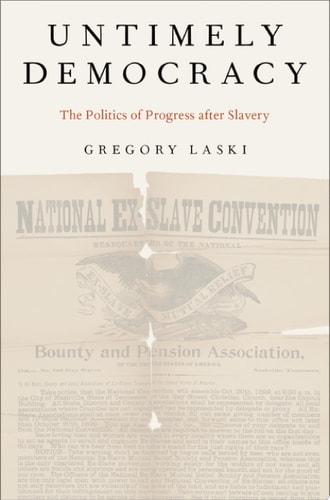
Untimely Democracy
0
0
As an Amazon Associate and affiliate partner, Menrva Books earns from qualifying purchases. Learn more
Author Description
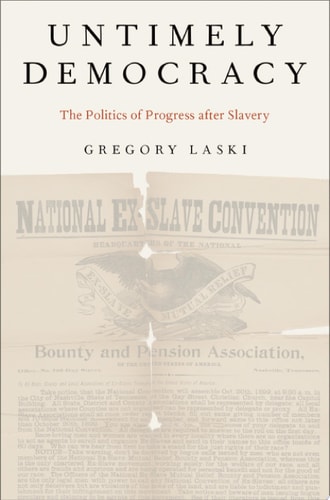
From The Abolition Era To The Civil Rights Movement To The Age Of Obama, The Promise Of Perfectibility And Improvement Resonates In The Story Of American Democracy. But What Exactly Does Racial Progress Mean, And How Do We Recognize And Achieve It? Untimely Democracy: The Politics Of Progress After Slavery Uncovers A Surprising Answer To This Question In The Writings Of American Authors And Activists, Both Black And White. Conventional Narratives Of Democracy Stretching From Thomas Jefferson's America To Our Own Posit A Purposeful Break Between Past And Present As The Key To The Viability Of This Political Form--the Only Way To Ensure Its Continual Development. But For Pauline E. Hopkins, Frederick Douglass, Stephen Crane, W. E. B. Du Bois, Charles W. Chesnutt, Sutton E. Griggs, Callie House, And The Other Figures Examined In This Book, The Campaign To Secure Liberty And Equality For All Citizens Proceeds Most Potently When It Refuses The Precepts Of Progressive Time. Placing These Authors' Post-civil War Writings Into Dialogue With Debates About Racial Optimism And Pessimism, Tracts On Progress, And Accounts Of Ex-slave Pension Activism, And Extending Their Insights Into Our Contemporary Period, Laski Recovers Late-nineteenth-century Literature As A Vibrant Site For Doing Political Theory. Untimely Democracy Ultimately Shows How One Of The Bleakest Periods In American Racial History Provided Fertile Terrain For A Radical Reconstruction Of Our Most Fundamental Assumptions About This Political System. Offering Resources For Moments When The March Of Progress Seems To Stutter And Even Stop, This Book Invites Us To Reconsider Just What Democracy Can Make Possible.
Menrva's Summary
THE THESIS
This book investigates how late-nineteenth-century American literature challenges conventional, linear narratives of racial progress by proposing that democracy functions most effectively when it rejects the standard timeline of improvement. Gregory Laski, a scholar of American literature and political theory, examines the writings of figures such as Frederick Douglass, W.E.B. Du Bois, and Pauline E. Hopkins. By analyzing their work alongside historical debates on racial optimism and pension activism, Laski argues that these authors utilized the post-Civil War era to reconstruct fundamental assumptions about the American political system.
THE SCOPE MAP
What You Will Find
- Analysis of post-Civil War literature by Black and white authors
- Examination of racial optimism and pessimism in political discourse
- Integration of ex-slave pension activism into literary theory
- Theoretical framework for understanding democracy outside of linear progress
Scope Limits
- Does not provide a comprehensive history of the entire Civil Rights Movement
- Focuses primarily on the late-nineteenth-century period rather than contemporary political policy
THE AUTHORITY PERSPECTIVE
Scholars and readers note the academic density of the prose and the book's contribution to the intersection of political theory and literary history. Experts highlight this as a significant re-evaluation of how historical literature can inform modern understandings of democratic failure and potential.
Page Count:
336
Publication Date:
2017-01-01
Publisher:
Oxford University Press
ISBN-10:
0190642807
ISBN-13:
9780190642808
History
African American
American
Literary Criticism
Democracy
Community Tags
Similar Books