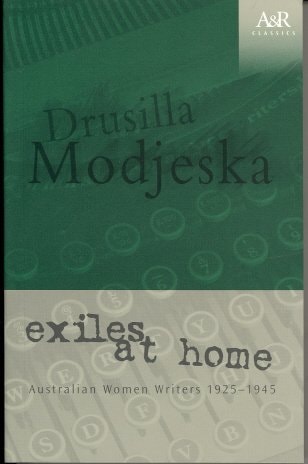
Exiles at Home: Australian Women Writers 1925-1945
0
0
As an Amazon Associate and affiliate partner, Menrva Books earns from qualifying purchases. Learn more
Author Description
At the end of the 1920s, Christina Stead had left Australia and was poised to write "Seven Poor Men of Sydney". In London, Miles Franklin was producing her first "Brent of Bin Bin" book and would soon return to Australia. Katherine Susannah Pritchard was enlarging her view of black and white in outback Australia, and the team writing under the name M. Barnard. Eldershaw had published its first novel and won the Bulletin prize. Gathering these writers into a network by her support and criticism was the influential Nettie Palmer. In the mid-1930s, these women and other writers such as Eleanor Dark, Jean Devanny, Dymphna Cusack and Betty Roland, faced the impact of fascism and another war. The platform and the writing desk had different and often conflicting appeals; and the Depression underlined the already precarious existence of the woman writer. This text traces the lives of a generation of Australia's women writers through letters, diaries, notebooks, and the memories of their contemporaries.
Menrva's Summary
THE THESIS
This work investigates the professional and personal challenges faced by a generation of Australian women writers navigating the socio-political turbulence between 1925 and 1945. Drusilla Modjeska, a noted scholar of Australian literature, synthesizes archival research and personal accounts to examine how these authors balanced their creative ambitions against the constraints of the Great Depression and the rising threat of global fascism. The text argues that these women formed a vital, interconnected network that defined the trajectory of Australian letters during a period of significant national and international instability.
THE SCOPE MAP
What You Will Find
- Analysis of the literary contributions of figures such as Christina Stead, Miles Franklin, and Katherine Susannah Pritchard.
- Examination of the influence of Nettie Palmer as a central node in the network of Australian women writers.
- Utilization of primary source materials including personal letters, private diaries, and contemporary notebooks.
- Discussion of the intersection between political activism, the economic pressures of the Depression, and the act of writing.
THE AUTHORITY PERSPECTIVE
This text is regarded as a foundational study in Australian literary history, providing a detailed look at the social and political conditions that shaped female authorship in the early twentieth century. The research is noted for its depth and its ability to contextualize individual creative output within the broader framework of a changing national identity.
Page Count:
296
Publication Date:
2001-01-01
Publisher:
HarperCollins
ISBN-10:
0207197431
ISBN-13:
9780207197437
Biography
Australian
Womens Studies
Cultural History
Literary Criticism
Community Tags
Similar Books