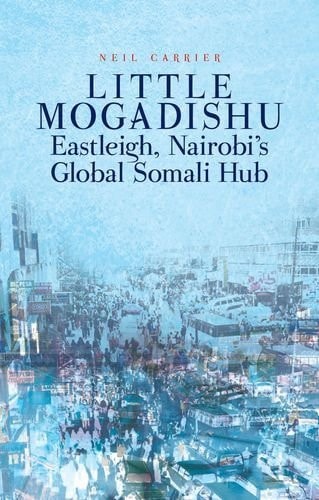
Little Mogadishu: Eastleigh, Nairobi's Global Somali Hub
0
0
As an Amazon Associate and affiliate partner, Menrva Books earns from qualifying purchases. Learn more
Author Description
Nairobi's Eastleigh estate has undergone pro- found change over the past two decades. Previously a quiet residential zone, the arrival of vast numbers of Somali refugees catalyzed its trans- formation into 'Little Mogadishu', a global hub for Somali business. Dozens of malls and hotels have sprouted from its muddy streets, attracting thousands of shoppers. Nonetheless, despite boosting Kenya's economy, the estate and its residents are held in suspicion over alleged links to Islamic terrorism, especially after the 2013 Westgate Mall attack, while local and international media have suggested with little evidence that its economic boom owes much to capital derived from Indian Ocean piracy.In contrast to such sensationalized reporting, Little Mogadishu is based on detailed historical and ethnographic research and explores the social and historical underpinnings of this economic boom. It examines how transnational networks converged on Eastleigh in the wake of the collapse of the Somali state, attracting capital from the Somali diaspora, and bringing goods--especially clothes and electronics--from Dubai, China and elsewhere that are much in demand in East Africa. In so doing, Little Mogadishu provides a compelling case-study of the developmental impact diasporas and transnational trade can have, albeit in a country where many see this development as suspect.
Menrva's Summary
THE THESIS
This book investigates the socio-economic transformation of Nairobi's Eastleigh estate into a global Somali commercial hub, challenging prevailing narratives that link its growth to illicit activities. Author Neil Carrier, an anthropologist specializing in East African studies, utilizes extensive ethnographic fieldwork and historical analysis to document how transnational networks and diaspora capital fueled this development. The work argues that Eastleigh's economic trajectory is a product of complex global trade routes rather than the sensationalized claims often found in media reports.
THE SCOPE MAP
What You Will Find
- Historical analysis of Eastleigh's transition from a residential zone to a commercial center
- Examination of transnational trade networks connecting Dubai, China, and East Africa
- Ethnographic accounts of Somali diaspora investment and business practices
- Critical assessment of the impact of the 2013 Westgate Mall attack on local perceptions
Scope Limits
- The text does not provide a comprehensive history of the entire city of Nairobi
- It does not offer a definitive legal analysis of the specific piracy allegations mentioned in media
THE AUTHORITY PERSPECTIVE
Scholars and regional experts recognize this work as a rigorous corrective to stigmatizing media portrayals of Eastleigh. Readers frequently note the balance between detailed economic data and the nuanced social history of the Somali community in Kenya.
Page Count:
256
Publication Date:
2017-02-15
Publisher:
Oxford University Press
ISBN-10:
0190646209
ISBN-13:
9780190646202
Economics
Africa
Anthropology
Migration Studies
Kenya
Sociology
Urban Studies
Community Tags
Similar Books