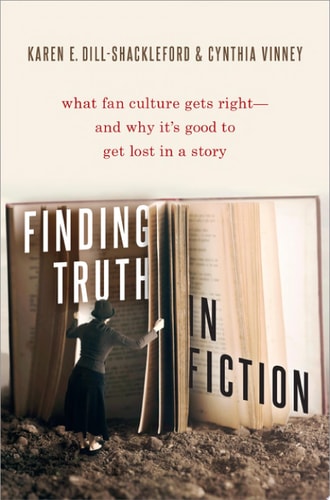
Finding Truth in Fiction
0
0
As an Amazon Associate and affiliate partner, Menrva Books earns from qualifying purchases. Learn more
Author Description
In Finding Truth In Fiction, Two Media Psychologists Reveal That There's Much More To Our Desire To Seek Out Stories In Film, Tv, And Books Than Simple Diversion - Fiction Can Help Us Find Truth In Our Real Lives. Whether You Consider Yourself A Fan Of Popular Media Or Whether You Find Yourself Thinking Of A Particular Fictional Scene For Inspiration, You Are Not Alone. Though Some Assume That Interest In A Fictional World Is A Sign Of Psychological Trouble, The Authors Enthusiastically Disagree. Because Story Worlds Are Simulations Of Our Social World, We Use Them To Make Sense Of Our Experiences And Even Decide What Kind Of People We Want To Be. This Makes Fiction Far From Trivial. By Exploring Our Relationship With Fictional Stories And Characters, The Authors Will Examine How We Create Mental Models In Our Minds So We Can Understand Stories And Characters And How We Differentiate Between The Identities Of Characters And The Actors Who Play Them. What Story Arcs, Such As The Hero's Journey, Are We Drawn To Again And Again? How Do The Moments That Strike Us As Important In A Story Change As We Age And Move Through Different Stages In Our Life? Delving Into These Questions And Many More, The Authors Conclude That Being A Fan Is Not Just Healthy, It's Human.
Menrva's Summary
THE THESIS
This book investigates the psychological mechanisms behind why humans engage with fictional narratives and how these stories function as essential tools for navigating real-world social experiences. The authors, both media psychologists, utilize a framework grounded in cognitive and social psychology to argue that consuming fiction is a healthy, adaptive behavior rather than a sign of psychological avoidance. They contend that fictional worlds serve as simulations that allow individuals to refine their social understanding, develop personal identity, and process complex life events.
THE SCOPE MAP
What You Will Find
- Analysis of mental models used to process narrative structures and character development.
- Examination of the psychological distinction between fictional characters and the actors portraying them.
- Exploration of recurring narrative archetypes, such as the hero's journey, and their influence on human development.
- Discussion on how audience engagement with media evolves across different life stages.
Scope Limits
- The text does not provide a comprehensive history of media production or film theory.
- It does not focus on the clinical treatment of media addiction or pathological obsession.
THE AUTHORITY PERSPECTIVE
Experts in media psychology view this text as a accessible bridge between academic research and popular interest. Readers frequently note that the prose remains clear and engaging while providing a robust psychological foundation for understanding fan behavior.
Page Count:
240
Publication Date:
2020-01-01
Publisher:
Oxford University Press
ISBN-10:
0190643617
ISBN-13:
9780190643614
Psychology
Non-Fiction
Fiction
Truth
Psychological aspects
Television programs
Sociology
Fans Persons
Mass media
Media Studies
Community Tags
Other Editions(2)
Similar Books