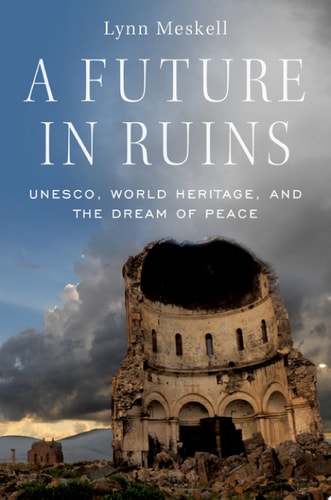
A Future in Ruins
0
0
As an Amazon Associate and affiliate partner, Menrva Books earns from qualifying purchases. Learn more
Author Description
Best Known For Its World Heritage Program Committed To The Identification, Protection And Preservation Of Cultural And Natural Heritage Around The World Considered To Be Of Outstanding Value To Humanity, The United Nations Educational, Scientific And Cultural Organization (unesco) Was Founded In 1945 As An Intergovernmental Agency Aimed At Fostering Peace, Humanitarianism, And Intercultural Understanding. Its Mission Was Inspired By Leading European Intellectuals Such As Henri Bergson, Marie Curie, Albert Einstein, Thomas Mann, H. G. Wells, And Aldous And Julian Huxley. Often Critiqued For Its Inherent Eurocentrism, Unesco And Its World Heritage Program Today Remain Embedded Within Modernist Principles Of Progress And Development And Subscribe To The Liberal Principles Of Diplomacy And Mutual Tolerance. However, Its Mission To Prevent Conflict, Destruction, And Intolerance, While Noble And Much Needed, Increasingly Falls Short, As Recent Battles Over The World Heritage Sites Of Preah Vihear, Chersonesos, Jerusalem, Palmyra, Aleppo, And Sana'a, Among Others, Have Underlined. A Future In Ruins Is The Story Of Unesco's Efforts To Save The World's Heritage And, In Doing So, Forge An International Community Dedicated To Peaceful Co-existence And Conservation. It Traces How Archaeology And Internationalism Were United In Western Initiatives After The Political Upheavals Of The First And Second World Wars. This Formed The Backdrop For The Emergent Hopes Of A Better World That Were To Captivate The Minds Of Men. Unesco's Leaders Were Also Confronted With Challenges And Conflicts About Their Own Mission. Would The Organization Aspire To Intellectual Pursuits That Contributed To The Dream Of Peace Or Instead Be Relegated To An Advisory And Technical Agency? An Eye-opening And Long Overdue Account Of A Celebrated Yet Poorly Understood Agency, A Future In Ruins Calls On Us All To Understand How And Why The Past Comes To Matter In The Present, Who Shapes It, And Who Wins Or Lose
Menrva's Summary
THE THESIS
This book investigates the historical evolution, institutional contradictions, and geopolitical limitations of UNESCO’s World Heritage program in its attempt to preserve global cultural sites. Author Lynn Meskell, a professor of anthropology and archaeology, utilizes extensive archival research and institutional analysis to examine how UNESCO’s mission has shifted from post-war idealism to a complex landscape of modern political conflict. She argues that the organization’s reliance on Western modernist principles often clashes with the realities of contemporary site destruction and nationalistic disputes. The work provides a critical assessment of how international diplomacy attempts to manage the past while navigating the pressures of the present.
THE SCOPE MAP
What You Will Find
- Historical analysis of UNESCO’s founding in 1945 and its intellectual origins.
- Case studies of contested heritage sites including Preah Vihear, Palmyra, and Sana'a.
- Examination of the tension between technical advisory roles and idealistic peace-building missions.
- Discussion of Eurocentrism within international heritage conservation frameworks.
Scope Limits
- The text does not provide a comprehensive guide to all individual World Heritage sites.
- It does not offer a technical manual for archaeological site preservation methods.
THE AUTHORITY PERSPECTIVE
Experts and scholars in the field of heritage studies recognize this work as a critical, rigorous examination of the institutional politics governing global preservation efforts. Readers frequently note the academic density of the prose, which provides a necessary, sobering look at the limitations of international diplomacy in protecting cultural history.
Page Count:
288
Publication Date:
2018-01-01
Publisher:
Oxford University Press
ISBN-10:
019064835X
ISBN-13:
9780190648350
History
Sociology
Archaeology
International relations
Community Tags
Similar Books