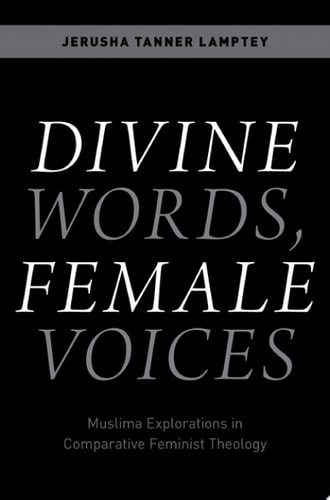
Divine Words, Female Voices
0
0
As an Amazon Associate and affiliate partner, Menrva Books earns from qualifying purchases. Learn more
Author Description
The Relationship Between Islam And Feminism Is Complex. There Are Many Muslim Scholars Who Fervently Promote Women's Equality. At The Same Time, There Is Ambivalence Regarding The General Norms, Terminology, And Approaches Of Feminism And Feminist Theology. This Ambivalence Is In Large Part A Product Of Various Hegemonic, Androcentric, And Patriarchal Discourses That Seek To Dictate Legitimate And Authoritative Interpretations. These Discourses Not Only Fuel Ambivalence, They Also Effectively Obscure Valuable Possibilities Related To Interreligious Feminist Engagement. Divine Words, Female Voices Is The Follow-up To Jerusha Lamptey's 2014 Book, Never Wholly Other, In Which She Introduced The Idea Of Muslima Theology And Applied It To The Topic Of Religious Diversity. In This New Book, She Extends Her Earlier Arguments To Contend That Interreligious Feminist Engagement Is Both A Theologically Valid Endeavor And A Vital Resource For Muslim Women Scholars. She Introduces Comparative Feminist Theology As A Method For Overcoming Challenges Associated With Interreligious Feminist Engagement, Reorients Comparative Discussions To Focus On The Two Divine Words (the Qur'an And Jesus) And Feminist Theology, And Uses This Reorientation To Examine Intersections, Discontinuities, And Insights Related To Diverse Theological Topics. This Book Is Distinctive In Its Responsiveness To Calls For New Approaches In Islamic Feminist Theology, Its Use Of The Method Of Comparative Theology, Its Focus On Muslim And Christian Feminist Theology In Comparative Analysis, And Its Constructive Articulation Of Muslima Theological Perspectives.
Menrva's Summary
THE THESIS
This book investigates how interreligious feminist engagement can serve as a valid and vital resource for Muslim women scholars navigating the complexities of Islamic feminism. Jerusha Tanner Lamptey, a scholar of Islam and comparative theology, argues that the current ambivalence toward feminist terminology within Islamic discourse is largely shaped by patriarchal and androcentric structures. She proposes the method of comparative feminist theology to bypass these limitations, focusing on the intersections between the Qur'an and the figure of Jesus to foster new theological insights.
THE SCOPE MAP
What You Will Find
- A framework for comparative feminist theology as a methodological tool
- Comparative analysis between Muslim and Christian feminist theological perspectives
- An exploration of the concept of Muslima theology
- Examination of theological intersections and discontinuities regarding divine words
Scope Limits
- The text does not provide a general history of Islamic feminism
- It does not offer a comprehensive survey of all global feminist movements
THE AUTHORITY PERSPECTIVE
Scholars in the field of religious studies identify this work as a significant contribution to the development of Muslima theology. Readers frequently note the academic density of the prose, which is intended for those familiar with comparative theological methodologies.
Page Count:
304
Publication Date:
2018-01-01
Publisher:
Oxford University Press
ISBN-10:
0190653388
ISBN-13:
9780190653385
Religion
Comparative Theology
Feminist Theology
Islam
Christianity
Women Studies
Community Tags
Similar Books