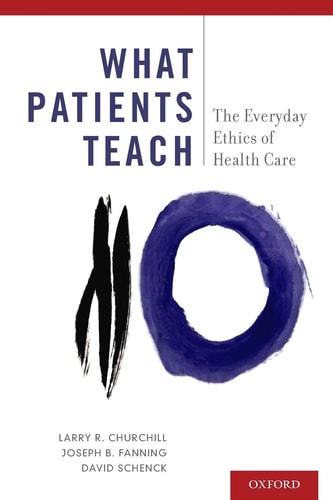
What Patients Teach: The Everyday Ethics of Health Care
0
0
As an Amazon Associate and affiliate partner, Menrva Books earns from qualifying purchases. Learn more
Author Description
Being a patient is a unique interpersonal experience but it is also a universal human experience. The relationships formed when we are patients can also teach some of life's most important lessons, and these relationships provide a special window into ethics, especially the ethics of healthcare professionals. This book answers two basic questions: As patients see it, what things allow relationships with healthcare providers to become therapeutic? What can this teach us about healthcare ethics? This volume presents detailed descriptions and analyses of 50 interviews with 58 patients, representing a wide spectrum of illnesses and clinician specialties. The authors argue that the structure, rhythm, and horizon of routine patient care are ultimately grounded in patient vulnerability and clinician responsiveness. From the short interview segments, the longer vignettes and the full patient stories presented here emerge the neglected dimensions of healthcare and healthcare ethics. What becomes visible is an ethics of everyday interdependence, with mutual responsibilities that follow from this moral symbiosis. Both professional expressions of healthcare ethics and the field of bioethics need to be informed and reformed by this distinctive, more patient-centered, turn in how we understand both patient care as a whole and the ethics of care more specifically. The final chapters present revised codes of ethics for health professionals, as well as the implications for medical and health professions education.
Menrva's Summary
THE THESIS
This book investigates how the lived experiences and perspectives of patients can fundamentally reform the theoretical framework of healthcare ethics. The authors, Larry R. Churchill, David Schenck, and Joseph B. Fanning, utilize qualitative data derived from 58 patient interviews to argue that clinical ethics should be grounded in the inherent vulnerability of the patient and the corresponding responsiveness of the clinician. By shifting the focus from abstract professional codes to the reality of everyday clinical encounters, the authors propose a model of ethics based on mutual interdependence and moral symbiosis.
THE SCOPE MAP
What You Will Find
- Qualitative analysis of 50 interviews involving 58 patients across diverse medical specialties.
- A proposed framework for an ethics of everyday interdependence in clinical settings.
- Revised ethical codes for health professionals and recommendations for medical education.
Scope Limits
- The text does not provide a comprehensive history of bioethical theory.
- It does not address macro-level healthcare policy or systemic economic issues within the medical industry.
THE AUTHORITY PERSPECTIVE
Experts in the field of bioethics recognize this work as a significant contribution to patient-centered care literature. Readers frequently note the accessible yet rigorous nature of the qualitative analysis, which bridges the gap between clinical practice and ethical theory.
Page Count:
208
Publication Date:
2016-11-01
Publisher:
Oxford University Press
ISBN-10:
0190650583
ISBN-13:
9780190650582
Bioethics
Sociology of Medicine
Medical care
Medical Ethics
Patient Care
Patients
Healthcare
Community Tags
Similar Books