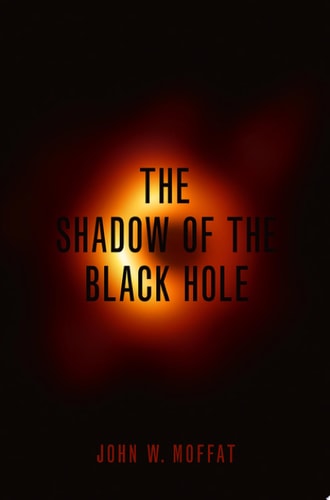
The Shadow of the Black Hole
0
0
As an Amazon Associate and affiliate partner, Menrva Books earns from qualifying purchases. Learn more
Author Description
Black holes entered the world of science fiction and films in the 1960s, and their popularity in our culture remains today. The buzz surrounding black holes was and is due, in large part, to their speculative nature. It is still difficult for the general public to determine fact versus fiction as it pertains to this terrifying idea: something big enough to swallow anything and everything in close proximity, with a gravitational force so strong that nothing, including light, can escape. In the fall of 2015, scientists at the Laser Interferometry Gravitational-Wave Observatory (LIGO) detected the first sounds from black holes, brought to earth by the gravitational waves that emitted from the merging of two black holes 1.4 billion light years away in space. This confirmed the existence of gravitational waves, which Albert Einstein predicted in 1916. In the spring of 2017, physicists and astronomers who were working on the Event Horizon Telescope (EHT) project captured the first image of a black hole. This was the supermassive black hole hosted by the galaxy M87 in the constellation Virgo, 53 million light years away, and the image shows the shadow the black hole casts upon the bright light surrounding it. In this book, John Moffat shares the history of black holes and presents the latest research into these mysterious celestial objects, including the astounding results from gravitational wave detection and the shadow of the black hole.
Menrva's Summary
THE THESIS
This book investigates the scientific reality of black holes by distinguishing established astrophysical facts from speculative science fiction narratives. John W. Moffat, a theoretical physicist, utilizes his professional background to synthesize the history of black hole research with contemporary observational data. He presents a framework that bridges the gap between Einstein's 1916 predictions and the modern technological breakthroughs that have finally rendered these celestial phenomena visible to human instrumentation.
THE SCOPE MAP
What You Will Find
- Historical development of black hole theory from the 1960s to the present
- Analysis of the 2015 LIGO gravitational wave detection
- Detailed explanation of the 2017 Event Horizon Telescope imaging of M87
- Scientific context regarding the gravitational properties of supermassive black holes
Scope Limits
- Does not provide a comprehensive textbook-level mathematical derivation of general relativity
- Does not focus on speculative science fiction tropes beyond their role in public perception
THE AUTHORITY PERSPECTIVE
Experts recognize this work as a clear, accessible synthesis of complex astrophysical milestones for the lay reader. Readers frequently note that the prose successfully balances technical accuracy with a narrative structure that makes modern gravitational research understandable to non-specialists.
Page Count:
226
Publication Date:
2020-01-01
Publisher:
Oxford University Press
ISBN-10:
0190650745
ISBN-13:
9780190650742
Science
Non-Fiction
Astronomy
Introductory Astronomy
Physics
Earth Sciences
Cosmology
Astrophysics
Community Tags
Similar Books