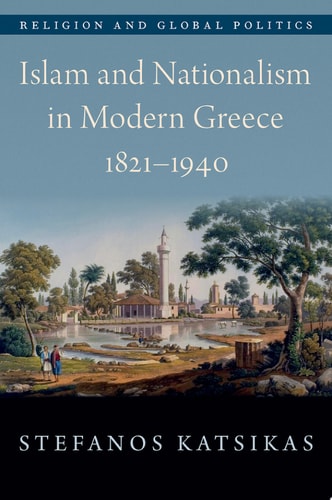
Islam and Nationalism in Modern Greece, 1821-1940 (Religion and Global Politics)
0
0
As an Amazon Associate and affiliate partner, Menrva Books earns from qualifying purchases. Learn more
Author Description
Drawing from a wide range of archival and secondary Greek, Bulgarian, Ottoman, and Turkish sources, Islam and Nationalism in Modern Greece, 1821-1940 explores the way in which the Muslim populations of Greece were ruled by state authorities from the time of Greece's political emancipation from the Ottoman Empire in the 1820s until the country's entrance into the Second World War, in October 1940. The book examines how state rule influenced the development of the Muslim population's collective identity as a minority and affected Muslim relations with the Greek authorities and Orthodox Christians. Greece was the first country in the Balkans to become an independent state and a pioneer in experimenting with minority issues. Greece's ruling framework and many state administrative measures and patterns would serve as templates in other Christian Orthodox Balkan states with Muslim minorities (Bulgaria, Romania, Serbia, Cyprus). Muslim religious officials were empowered with authority which they did not have in Ottoman times, and aspects of the Islamic law (Sharia) were incorporated into the state legal system to be used for Muslim family and property affairs. Religion remained a defining element in the political, social, and cultural life of the post-Ottoman Balkans; Stefanos Katsikas explores the role religious nationalism and public institutions have played in the development and preservation of religious and ethnic identity. Religion remains a key element of individual and collective identity but only as long as there are strong institutions and the political framework to support and maintain religious diversity.
Menrva's Summary
THE THESIS
This book investigates how the Greek state managed its Muslim minority populations from the 1820s to 1940, examining the intersection of religious identity and national policy. Stefanos Katsikas, a scholar of Balkan history, utilizes a diverse array of archival sources from Greece, Bulgaria, and Turkey to construct his analysis. He argues that the Greek administrative framework for handling Muslim religious officials and Islamic law served as a foundational model for other post-Ottoman Balkan states. The work posits that religious identity persists as a primary social marker only when supported by specific institutional and political structures.
THE SCOPE MAP
What You Will Find
- Analysis of state administrative measures regarding Muslim minority populations.
- Examination of the integration of Sharia law into the Greek legal system for family and property matters.
- Comparative study of minority management across Balkan states including Bulgaria, Romania, and Serbia.
Scope Limits
- The study concludes in 1940 and does not cover the post-World War II era or modern developments.
- The focus is primarily on state-level policy and institutional frameworks rather than individual personal narratives.
THE AUTHORITY PERSPECTIVE
Scholars recognize this work as a significant contribution to the study of Balkan minority politics and the institutionalization of religious identity. Readers frequently note the extensive use of multi-lingual archival sources, which provides a balanced view of state-minority relations in the post-Ottoman period.
Page Count:
293
Publication Date:
2021-01-01
Publisher:
Oxford University Press
ISBN-10:
0190652020
ISBN-13:
9780190652029
History
Religion
Sociology
European History
Middle Eastern
Modern History
Community Tags
Similar Books