Narrow Fairways
0
0
As an Amazon Associate and affiliate partner, Menrva Books earns from qualifying purchases. Learn more
Author Description
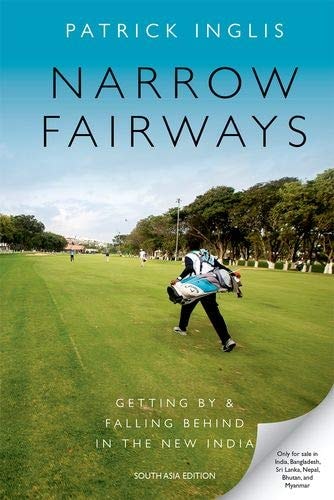
India Remains A Country Mired In Poverty, With Two-thirds Of Its 1.3 Billion People Living On Little More Than A Few Dollars A Day. Just As Telling, The Country's Informal Working Population Numbers Nearly 500 Million, Or Approximately Eighty Percent Of The Entire Labor Force. Despite These Figures And The Related Structural Disadvantages That Imperil The Lives Of So Many, The Indian Elite Maintain That The Poor Need Only Work Harder And They, Too, Can Become Rich. The Results Of This Ambitious Ten-year Ethnography At Exclusive Golf Clubs In Bangalore Shatter Such Self-serving Illusions. In Narrow Fairways, Patrick Inglis Combines Participant Observation, Interviews, And Archival Research To Show How Social Mobility Among The Poor Lower-caste Golf Caddies Who Carry The Golf Sets Of Wealthy Upper-caste Members At These Clubs Is Ultimately Constrained And Narrowed. The Book Highlights How Elites Secure And Extend Class And Caste Privileges, While Also Delivering A Necessary Rebuke To India's Present Development Strategy, Which Pays Far Too Little Attention To Promoting Quality Healthcare, Education, And Other Basic Social Services That Would Deliver Real Opportunities To The Poor.
Menrva's Summary
THE THESIS
This book investigates the structural barriers to social mobility for lower-caste workers within the context of India's elite golf club culture. Patrick Inglis, a sociologist, utilizes a decade of ethnographic research to challenge the prevailing narrative that individual hard work is sufficient to overcome systemic poverty. By examining the interactions between wealthy upper-caste members and the poor caddies who serve them, the author argues that current development strategies fail to address the lack of essential social services required for genuine economic advancement.
THE SCOPE MAP
What You Will Find
- A ten-year ethnographic study conducted at exclusive golf clubs in Bangalore.
- Analysis of the intersection between caste privilege and class stratification.
- Examination of the limitations of meritocratic ideology in the Indian labor market.
Scope Limits
- The study is geographically focused on Bangalore and may not represent all regional variations of labor dynamics in India.
- The research does not provide a comprehensive policy manual for national economic reform.
THE AUTHORITY PERSPECTIVE
Scholars and sociologists recognize this work as a rigorous contribution to the study of inequality and labor in contemporary India. Readers frequently note the academic density of the prose, which effectively bridges the gap between micro-level social interactions and macro-level economic policy.
Page Count:
304
Publication Date:
2019-01-01
Publisher:
Oxford University Press
ISBN-10:
0190664789
ISBN-13:
9780190664787
Economics
India
Labor Studies
Ethnography
Caste Studies
Social Class
Sociology
Community Tags
Other Editions(3)

Similar Books