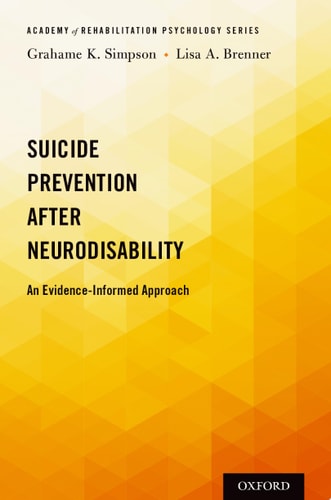
Suicide Prevention After Neurodisability: An Evidence-Informed Approach
0
0
As an Amazon Associate and affiliate partner, Menrva Books earns from qualifying purchases. Learn more
Author Description
Suicide risk after disabling neurological conditions is up to five times higher than for the general population; however, knowledge about the extent of the problem, associated risk factors, and effective evidence-informed suicide prevention approaches are limited and fragmented. Suicide Prevention after Neurodisability focuses on the challenges faced by eight different types of neurodisability, namely stroke, spinal cord injury, traumatic brain injury, amyotrophic lateral sclerosis, epilepsy, Huntington's disease, multiple sclerosis, and Parkinson's disease. It pulls together the current knowledge about this risk, detailing a complex interplay between neuropathological, psychiatric, psychological, and psychosocial factors that in part account for this increased presence of suicidal thoughts and behaviors.Despite the challenges, suicide is often preventable. The best available evidence-informed approaches to suicide prevention in neurodisability are outlined, including clinical approaches to screening, suicide risk assessment, psychotherapeutic interventions, and psychosocial management. The reader-friendly approach will help make suicide prevention after neurodisability everyone's business.
Menrva's Summary
THE THESIS
This text investigates the elevated suicide risk among individuals with neurodisabilities and establishes an evidence-informed framework for clinical intervention. Authors Grahame K. Simpson and Lisa A. Brenner, both experts in rehabilitation psychology, synthesize current research to address the fragmented state of knowledge regarding suicidal ideation in neurological populations. They argue that by identifying the interplay between neuropathological, psychiatric, and psychosocial factors, clinicians can implement more effective screening and management strategies.
THE SCOPE MAP
What You Will Find
- Analysis of suicide risk across eight specific conditions: stroke, spinal cord injury, traumatic brain injury, amyotrophic lateral sclerosis, epilepsy, Huntington's disease, multiple sclerosis, and Parkinson's disease.
- Clinical protocols for suicide risk assessment and screening within rehabilitation settings.
- Evidence-based psychotherapeutic and psychosocial intervention strategies.
Scope Limits
- The text focuses primarily on clinical and professional intervention rather than patient-facing self-help resources.
- It does not provide exhaustive longitudinal data for every rare neurological condition beyond the eight primary categories identified.
THE AUTHORITY PERSPECTIVE
Experts recognize this work as a critical, foundational resource for rehabilitation psychologists and medical professionals working with neurodivergent populations. Readers frequently note the clinical utility of the text, highlighting its success in bridging the gap between neurological care and psychiatric suicide prevention protocols.
Page Count:
288
Publication Date:
2019-01-01
Publisher:
Oxford University Press
ISBN-10:
0190668636
ISBN-13:
9780190668631
Psychology
Mental Health
Neurology
Rehabilitation
Medical
Medicine
Allied Health
Community Tags
Similar Books