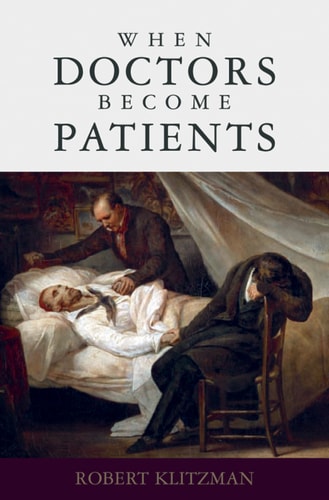
When Doctors Become Patients
0
0
As an Amazon Associate and affiliate partner, Menrva Books earns from qualifying purchases. Learn more
Author Description
For many doctors, their role as powerful healer precludes thoughts of ever getting sick themselves. When they do, it initiates a profound shift of awareness-- not only in their sense of their selves, which is invariably bound up with the "invincible doctor" role, but in the way that they view their patients and the doctor-patient relationship. While some books have been written from first-person perspectives on doctors who get sick-- by Oliver Sacks among them-- and TV shows like "House" touch on the topic, never has there been a "systematic, integrated look" at what the experience is like for doctors who get sick, and what it can teach us about our current health care system and more broadly, the experience of becoming ill. The psychiatrist Robert Klitzman here weaves together gripping first-person accounts of the experience of doctors who fall ill and see the other side of the coin, as a patient. The accounts reveal how dramatic this transformation can be-- a spiritual journey for some, a radical change of identity for others, and for some a new way of looking at the risks and benefits of treatment options. For most however it forever changes the way they treat their own patients. These questions are important not just on a human interest level, but for what they teach us about medicine in America today. While medical technology advances, the health care system itself has become more complex and frustrating, and physician-patient trust is at an all-time low. The experiences offered here are unique resource that point the way to a more humane future.
Menrva's Summary
THE THESIS
This book investigates how the experience of illness fundamentally alters a physician's professional identity and their subsequent approach to the doctor-patient relationship. Robert L. Klitzman, a psychiatrist and professor at Columbia University, utilizes his clinical background to synthesize a systematic analysis of the medical profession. He argues that the transition from healer to patient exposes systemic flaws in the American healthcare infrastructure and challenges the traditional paradigm of physician invincibility.
THE SCOPE MAP
What You Will Find
- Qualitative data derived from extensive interviews with physicians who have experienced serious illness.
- Analysis of the psychological shift in identity when doctors occupy the patient role.
- Examination of the erosion of trust within the modern physician-patient dynamic.
Scope Limits
- The text focuses primarily on the American medical system and may not reflect global healthcare variations.
- It does not provide a clinical guide for treating specific diseases, but rather focuses on the sociological and personal experience of the patient role.
THE AUTHORITY PERSPECTIVE
Medical professionals and scholars frequently cite this work as a significant contribution to the study of medical ethics and the humanization of healthcare. Experts highlight the text for its ability to bridge the gap between clinical detachment and the lived reality of patient vulnerability.
Page Count:
344
Publication Date:
2007-01-01
Publisher:
Oxford University Press
ISBN-10:
0190296267
ISBN-13:
9780190296261
Health
Biography
Psychology
Medicine
Allied Health
Medical
Physicians
Sociology
Physician & Patient
Community Tags
Similar Books