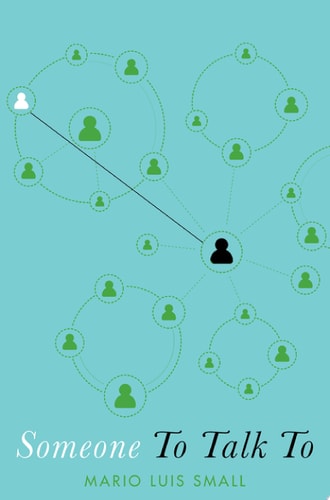
Someone To Talk To
0
0
As an Amazon Associate and affiliate partner, Menrva Books earns from qualifying purchases. Learn more
Author Description
When people are facing difficulties, they often feel the need for a confidant-a person to vent to or a sympathetic ear with whom to talk things through. How do they decide on whom to rely? In theory, the answer seems obvious: if the matter is personal, they will turn to a spouse, a family member, or someone close. In practice, what people actually do often belies these expectations.In Someone To Talk To, Mario Luis Small follows a group of graduate students as they cope with stress, overwork, self-doubt, failure, relationships, children, health care, and poverty. He unravels how they decide whom to turn to for support. And he then confirms his findings based on representative national data on adult Americans.Small shows that rather than consistently relying on their "strong ties," Americans often take pains to avoid close friends and family, as these relationships are both complex and fraught with expectations. In contrast, they often confide in "weak ties," as the need for understanding or empathy trumps their fear of misplaced trust. In fact, people may find themselves confiding in acquaintances and even strangers unexpectedly, without having reflected on the consequences.Someone To Talk To reveals the often counter-intuitive nature of social support, helping us understand when people will keep depression secret from their close ones, why people may avoid reporting sexual assault, how people may decide whom to come out to, and why even competitors can be among a person's best confidants.Amid a growing wave of big data and large-scale network analysis, Small returns to the basic questions of whom we connect with, how, and why, upending decades of conventional wisdom on how we should think about and analyze social networks.
Menrva's Summary
THE THESIS
This book investigates the counter-intuitive mechanisms governing how individuals select confidants when facing personal difficulties. Mario Luis Small, a professor of sociology, utilizes a mixed-methods approach to challenge the conventional wisdom that people primarily rely on strong, intimate ties for emotional support. By analyzing the experiences of graduate students alongside national survey data, Small argues that the complexity of close relationships often leads individuals to seek support from weak ties or acquaintances instead.
THE SCOPE MAP
What You Will Find
- Qualitative analysis of graduate student social networks and stress management.
- Quantitative verification using representative national data on adult Americans.
- A theoretical framework explaining the preference for weak ties over strong ties in specific contexts.
Scope Limits
- The study does not provide a comprehensive guide to clinical therapy or professional counseling.
- It does not focus on digital-only social media interactions, prioritizing interpersonal dynamics.
THE AUTHORITY PERSPECTIVE
Sociologists and researchers frequently cite this work for its challenge to traditional network theory and its nuanced look at social support systems. Experts highlight the text as a significant contribution to the study of social capital and interpersonal communication.
Page Count:
296
Publication Date:
2017-10-25
Publisher:
Oxford University Press
ISBN-10:
0190661429
ISBN-13:
9780190661427
Psychology
Social Networks
Sociology
Human behavior
Academic