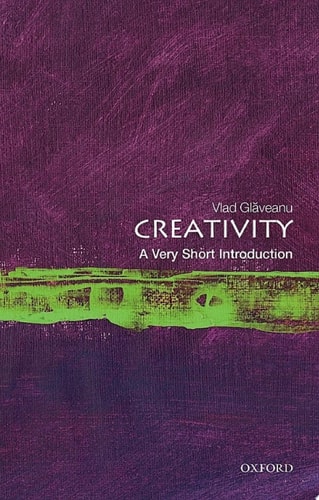
Creativity: A Very Short Introduction
0
0
As an Amazon Associate and affiliate partner, Menrva Books earns from qualifying purchases. Learn more
Author Description
Very Short Introductions: Brilliant, Sharp, Inspiring For thousands of years humanity has engaged in creative expression, allowing us to relate to other people, contribute to shared culture, build an identity, and give meaning to our existence. From the painted caves in Lascaux and the invention of the first tools to modern day advertising campaigns and inventors' labs, creativity has a long past but a short history. The word 'creativity' emerged in the English language in the 19th century and only become popular from the mid-20th century. This Very Short Introduction explores the history, theory, and practice of creativity from a psychological perspective. Vlad Glăveanu considers the nature and development of the creative process, and analyzes the reasons why we produce creative work. Offering a sociocultural reading of this phenomenon, he discusses how we can understand creative people and their creations within the social, material, and historical context that made them possible. In doing so, he demonstrates how we can address the meaning and value of creativity beyond its contribution to economic growth and personal well-being. Finally Glăveanu focuses on the future of creativity and creativity research, reflecting on technological development, the evolution of society and, ultimately, on our place in a world populated by creative beings, ideas, and encounters. ABOUT THE SERIES: The Very Short Introductions series from Oxford University Press contains hundreds of titles in almost every subject area. These pocket-sized books are the perfect way to get ahead in a new subject quickly. Our expert authors combine facts, analysis, perspective, new ideas, and enthusiasm to make interesting and challenging topics highly readable.
Menrva's Summary
THE THESIS
This book investigates the nature, history, and sociocultural dimensions of human creativity to determine how it functions within social and material contexts. Vlad Glăveanu, a professor of psychology, utilizes a sociocultural framework to move beyond traditional individualistic views of creativity. He synthesizes historical data and psychological theory to argue that creative expression is fundamentally a product of human interaction with the environment and society.
THE SCOPE MAP
What You Will Find
- Historical overview of the term 'creativity' and its evolution in the English language.
- Sociocultural analysis of the creative process and its relationship to material culture.
- Examination of the future of creativity research in the context of technological advancement.
Scope Limits
- The text does not provide a 'how-to' guide for personal creative development.
- It does not focus on neurobiological mechanisms of the brain during creative tasks.
THE AUTHORITY PERSPECTIVE
Experts recognize this text as a concise, high-level synthesis of contemporary psychological perspectives on creativity. Readers frequently note the academic density of the prose, which effectively condenses complex sociocultural theories into a brief, accessible format.
Page Count:
144
Publication Date:
2021-01-01
Publisher:
OUP Oxford
ISBN-10:
0192580876
ISBN-13:
9780192580870
Philosophy
Psychology
Non-Fiction
Sociology
Creativity
Academic
Community Tags
Similar Books