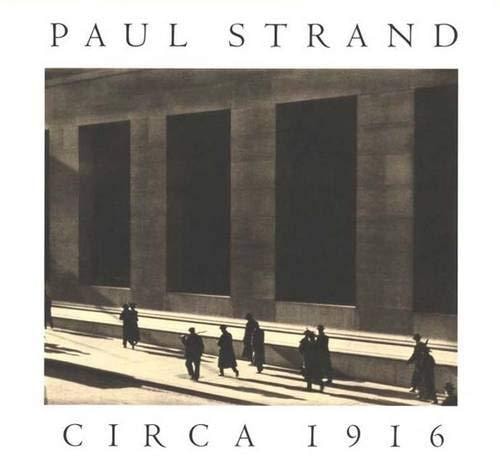
Paul Strand Circa 1916
0
0
As an Amazon Associate and affiliate partner, Menrva Books earns from qualifying purchases. Learn more
Author Description
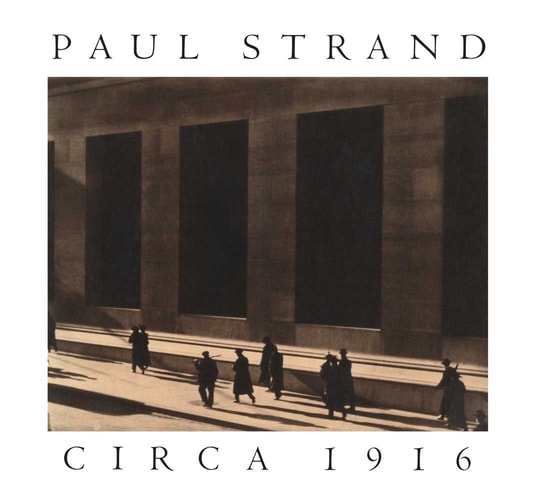
Paul Strand (1890–1976) was one of the most important and influential photographers of this century. The dramatic achievements of his early career, which have not until now been studied apart from his entire oeuvre, are the focus of this book, which accompanies an exhibition at The Metropolitan Museum of Art, New York. Spurred by the example of Cézanne, Picasso, and Nietzsche, Strand pushed the medium into artistic terrain considered too difficult, cerebral, or brutal to describe with a camera. His undeniable success brought photography to its maturity. For concentrated power, formal coherence, and human sensitivity, the extraordinary pictures he made in and around New York City in 1916 have never been bettered. After studying photography with the social reformer Lewis Hine, Strand began to absorb the ideas of the European avant-garde, gradually abandoning the painterly effects of pictorialism in favor of a candid and psychologically potent realism on the one hand and a masterfully wrought abstraction on the other. Fellow photographer and art entrepreneur Alfred Stieglitz recognized Strand's astonishing pictures as bold strides into a new world and heralded them as the first images in an incisive modern vision―a direct and flexible idiom expressive of twentieth-century experience. Strand's large, beautiful platinum prints are reproduced here in superb tritone plates. The text by Maria Morris Hambourg traces the early development of Strand's ideas, the complex cultural context of his experiments, and the emergence of such masterpieces as Wall Street, White Fence, and Blind. [This book was originally published in 1998 and has gone out of print. This edition is a print-on-demand version of the original book.] Published by The Metropolitan Museum of Art/Distributed by Yale University Press
Menrva's Summary
THE THESIS
This book examines the pivotal early career of Paul Strand, a photographer who revolutionized the medium. Spurred by the artistic and philosophical currents of his time, Strand moved away from pictorialism towards a candid, psychologically potent realism and masterful abstraction. This work, accompanying an exhibition at The Metropolitan Museum of Art, focuses on his achievements around 1916, considered by many to be his finest. The text traces his intellectual development and the creation of iconic images like 'Wall Street' and 'Blind'.
THE SCOPE MAP
- Focus on Paul Strand's early career and its impact on photography.
- Analysis of Strand's artistic influences, including Cézanne, Picasso, and Nietzsche.
- Exploration of Strand's transition from pictorialism to realism and abstraction.
- Detailed examination of photographs made in and around New York City in 1916.
- Discussion of Strand's relationship with Alfred Stieglitz and the emergence of a modern photographic vision.
- Reproduction of Strand's large platinum prints in tritone plates.
- Traces the development of Strand's ideas and the cultural context of his experiments.
- Highlights masterpieces such as Wall Street, White Fence, and Blind.
THE AUTHORITY PERSPECTIVE
This book, accompanying an exhibition at The Metropolitan Museum of Art, focuses on the dramatic achievements of Paul Strand's early career, particularly his work from 1916. The text by Maria Morris Hambourg traces the development of Strand's ideas and the cultural context of his experiments. It highlights his move towards a candid, psychologically potent realism and masterfully wrought abstraction, bringing photography to maturity. The reproductions of his platinum prints are noted for their superb quality.
Page Count:
192
Publication Date:
2013-01-01
Publisher:
Metropolitan Museum of Art New York
ISBN-10:
0300200102
ISBN-13:
9780300200102
Biography
Art
Photography
Non-Fiction
Art History
Community Tags
Other Editions(2)
Similar Books