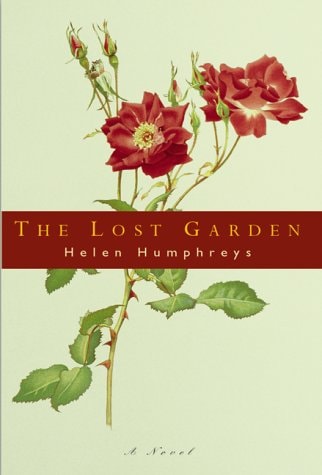
The Lost Garden
0
0
As an Amazon Associate and affiliate partner, Menrva Books earns from qualifying purchases. Learn more
Author Description
Though The Lost Garden, the third novel by Kingston-based writer Helen Humphreys, is set in England in 1941, it takes place far from the bombs of the Blitz. Gwen Davis, a sad, shy employee of the Royal Horticultural Society who's spent much of her adulthood studying diseased parsnips, leaves London to lead young members of the Women's Land Army on an estate in the Devon countryside. She arrives amid great confusion, but soon realizes that she's inherited a gaggle of Land Girls who are less interested in growing potatoes for the war effort than in consorting with the Canadian soldiers stationed nearby. Gwen is not a natural leader, but she does find allies in Jane, a wan but caustic young woman whose boyfriend is missing in action, and Captain Raley, a dashing Canadian officer prone to quoting from the poems of Tennyson. Gwen also discovers a garden planted by someone who worked on the estate during its grandest years, before World War I decimated an earlier generation of English gardeners. The events that follow prove that the melancholy narrator is wrong to believe, as she says early in the story, that "the stupidity of vegetables is preferable to the unpredictability of people." The Lost Garden is written in a style very much informed by Gwen's favourite writer, Virginia Woolf, who herself has just gone missing as the novel begins. Although some dialogue teeters on the edge between lyrical and overripe, the action builds to a lovely finale that merges all of the novel's disparate elements into something with genuine emotional resonance. Like the roses that fascinate the novel's heroine, The Lost Garden 's poise and beauty are complemented by its surprisingly hardy nature. --Jason Anderson
Menrva's Summary
THE PULSE
Gwen Davis, a reserved horticulturalist, finds her quiet life upended when she is tasked with managing a group of unruly Land Girls on a remote Devon estate during the height of the Second World War. Tasked with overseeing agricultural production, Gwen must navigate the complex social dynamics of her charges, who are more preoccupied with local soldiers than the war effort. As she struggles to assert her authority, she uncovers a neglected garden that serves as a silent witness to the losses of a previous generation. The narrative, presented through Gwen's introspective first-person perspective, mirrors the atmospheric and psychological depth found in the works of Virginia Woolf.
INSIDE THE PAGES
- Introspective first-person narration reflecting a scholarly, reserved temperament.
- Atmospheric descriptions of the English countryside and the restorative power of nature.
- Exploration of the contrast between the predictability of botany and the volatility of human relationships.
- Integration of historical context regarding the Women's Land Army during World War II.
- Thematic focus on the lingering trauma of the First World War on the English landscape.
- Literary allusions to the works of Virginia Woolf and Alfred Lord Tennyson.
- Character-driven development centered on the growth of an unlikely leader.
- A slow-burning narrative pace that emphasizes internal reflection over external action.
THE COLLECTIVE ECHO
This novel is widely regarded for its lyrical prose and its ability to capture the quiet, domestic side of wartime life. Critics often highlight the author's success in balancing the fragility of the characters with the resilient nature of the garden setting. The narrative's stylistic debt to Virginia Woolf is frequently noted as a defining feature that elevates the story's emotional weight. Readers appreciate the subtle character arcs that allow the protagonist to emerge from her self-imposed isolation. The work stands as a testament to the idea that even in times of global conflict, personal growth and the discovery of beauty remain possible.
Page Count:
183
Publication Date:
2002-01-01
Publisher:
HarperFlamingoCanada
ISBN-10:
0002005115
ISBN-13:
9780002005111
Romance
Literary Fiction
Historical Fiction
Coming of Age
Literary
England
Literature & Fiction
War
Community Tags
Similar Books