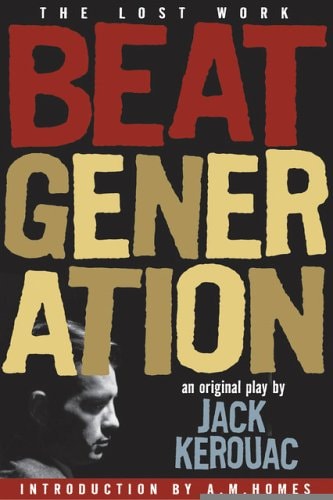
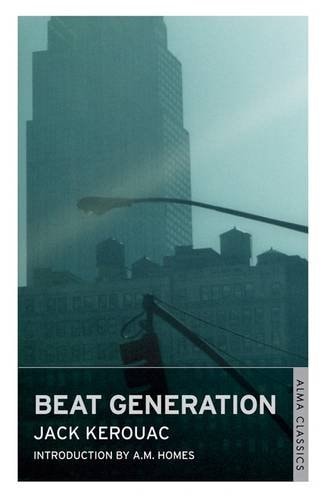
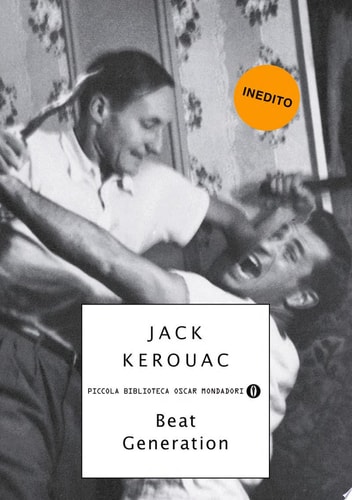
Beat Generation
0
0
As an Amazon Associate and affiliate partner, Menrva Books earns from qualifying purchases. Learn more
Author Description
This is Jack Kerouac's great lost work, a play written in 1957, the same year that On the Road was first published. Beat Generation is about tension, about friendship, and about karma – what it is and how you get it. It begins in New York's Bowery, with wine in the morning, and ends with questions of the form of the world. From money and the need for it, to religion and the karma of Christ, to the mysteries and wisdom of life reflected in horseracing, Kerouac touches on the essentials of Beat mentality, the rejection of middle class values and the expansion of consciousness.With the same biting wit and honest as Kerouac's novels, Beat Generation portrays an authentic and alternate 1950s America. Kerouac's characters are working-class men—a step away from vagrants, but not a big step. His dialogue suggests spontaneous jazz riffs in its rhythm and restless philosophy in its content. Here is the genuine heart and soul of the zeitgeist that blossomed into the counter-culture of 1960s America and lives in restless spirits today.
Menrva's Summary
THE PULSE
A group of restless men navigate the tensions of friendship, poverty, and spiritual inquiry in 1950s New York. The protagonist and his circle of associates grapple with the constraints of a society they reject, seeking meaning through spontaneous philosophy and the pursuit of unconventional wisdom. Their objective is to reconcile their daily survival in the Bowery with their desire for expanded consciousness and karmic understanding. The narrative unfolds through the rhythmic, improvisational dialogue characteristic of the author's prose, capturing the friction between working-class reality and the search for transcendence.
INSIDE THE PAGES
- Dramatic structure utilizing the conventions of a stage play
- Dialogue modeled after the improvisational rhythms of jazz
- Exploration of the karmic implications of daily actions
- Critique of mid-century middle-class social values
- Setting centered on the gritty atmosphere of the New York Bowery
- Philosophical inquiries into the nature of religion and money
- Character archetypes representing the fringes of working-class life
- Thematic focus on the rejection of conventional societal norms
THE COLLECTIVE ECHO
This work serves as a vital artifact of the Beat movement, capturing the raw energy that defined Kerouac's more famous prose. Readers often identify the play as a missing link in the author's bibliography, providing a unique look at his ability to translate his signature style into a theatrical format. The text is frequently analyzed for its candid portrayal of the 1950s counter-culture and its philosophical preoccupations with karma and existential freedom. It stands as a testament to the author's enduring influence on the American literary landscape and the restless spirit of his generation.
Page Count:
120
Publication Date:
2005-10-03
Publisher:
HarperCollins Publishers
ISBN-10:
0002007371
ISBN-13:
9780002007375
Literary Fiction
1950s
Literature & Fiction
Plays
Dramas & Plays
Counterculture
United States
Community Tags
Other Editions(8)

Similar Books



Reader Comments
Share Your Thoughts
No comments yet. Be the first to share your thoughts!