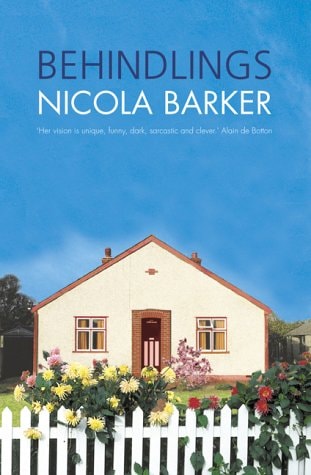
Behindlings
0
0
As an Amazon Associate and affiliate partner, Menrva Books earns from qualifying purchases. Learn more
Author Description
Behindlings, the fifth novel from Nicola Barker, is a welcome return, both in mood and in geography, to the gothic terrain of her Impac Prize winner Wide Open. Set in parochial Canvey Island, Essex, this book is inventive, funny, unnerving, and often magnificently strange. Barker's Canvey (once dubbed "Candy Island" by Daniel Defoe) is, with its Wimpy Bar, dreary pubs, and long-cherished grudges, rumours, and secrets, a quintessentially English small town. Its emotionally damaged population is augmented by the "Behindlings" of the title, a gaggle of oddballs who follow, or more precisely obsessively stalk, the novel's enigmatic central character, Wesley. The architect of a chocolate company-funded treasure hunt, author of a pseudo-Nietzschean walking guide and the man behind the daring theft of an antique pond, he is a rather malevolent Pied Piper. Part Alvin Toffler-quoting, peripatetic environmental visionary, part immoral (and maybe downright evil) fraudster, he's also notorious for feeding the fingers on his right hand to an eagle owl "in an act of penance" for accidentally killing his brother. Barker has always had a penchant for the surreal, and occasionally here both plot and characterization can get swamped in flights of absurdist imagination. She is perhaps too fond of the elaborate simile. The clackety, clackety of the "like" and "as" of her prose style is, from time to time, a little exasperating. Despite this, her narrative is so alluringly, so charmingly odd, bristling with puzzles and etymological games and full of wonderfully, devilishly comic touches, that it's easy to ignore its minor flaws.
Menrva's Summary
THE PULSE
The arrival of an enigmatic, manipulative figure named Wesley on Canvey Island triggers a bizarre social contagion as a group of obsessive followers, the "Behindlings," begin to stalk his every move. Wesley, a man defined by his pseudo-philosophical musings and a history of grotesque penance, orchestrates a series of strange events that disrupt the parochial stability of his Essex surroundings. The narrative explores the power dynamics between this charismatic fraudster and his devoted, damaged entourage, set against the backdrop of a dreary, secretive English town. Through a lens of absurdist humor and psychological tension, the story examines the nature of influence and the fragility of communal identity.
INSIDE THE PAGES
- A setting defined by the claustrophobic, gothic atmosphere of Canvey Island.
- A central protagonist who functions as a malevolent, peripatetic Pied Piper figure.
- Frequent use of elaborate, dense similes and metaphorical language.
- A narrative structure that incorporates etymological games and complex puzzles.
- Exploration of themes involving obsession, fraud, and emotional damage.
- A cast of eccentric, marginalized characters who form the "Behindlings" collective.
- A tone that oscillates between dark comedy and surrealist absurdity.
- A prose style characterized by rhythmic, repetitive linguistic patterns.
THE COLLECTIVE ECHO
Reception of this work highlights its status as a return to the distinctive, gothic sensibilities found in the author's earlier award-winning fiction. Critics and readers often point to the novel's inventive, strange atmosphere as its primary strength, noting how effectively it captures the peculiarities of small-town English life. While some readers find the author's penchant for elaborate similes and dense prose occasionally distracting, the consensus remains that the narrative's charm and wit outweigh these stylistic quirks. The book is widely regarded as a challenging, darkly comic exploration of human obsession that rewards those who engage with its complex, puzzle-like structure.
Page Count:
544
Publication Date:
2003-01-01
Publisher:
Harper Collins Canada Ltd.
ISBN-10:
0002005417
ISBN-13:
9780002005418
Contemporary
Fiction
Satire
Contemporary
Fiction
Psychological
Subjects
Friendship
British literature
Literature & Fiction
Gothic
Modern fiction
England
Community Tags
Other Editions(5)


Similar Books


Reader Comments
Share Your Thoughts
No comments yet. Be the first to share your thoughts!