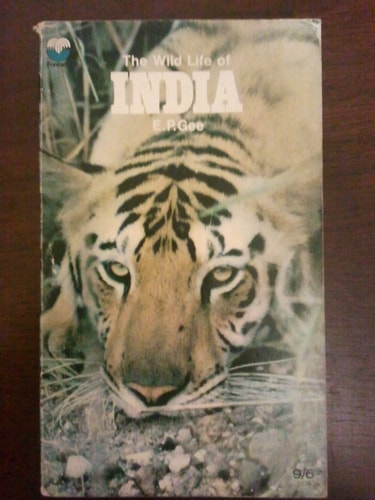
The Wild Life of India
0
0
As an Amazon Associate and affiliate partner, Menrva Books earns from qualifying purchases. Learn more
Author Description
E.P. Gee was one of the earliest wildlife photographers of India. He led, what one may call, ‘a-dream-life’. A Cambridge educated Anglo-Indian, Edward Pritchard Gee took up employment on the tea estates of Assam in the midst of thick forests. All his holidays and leisure time was dedicated to travel and photography. He travelled to all the major wildlife sanctuaries and forests of India, clicking photographs! This is about his travels, people he met, animals he saw. Up close. The majestic gaurs of Bandipur. The charging rhinos of Kaziranga. The impressive elephant herds of Periyar. The unforgettable lions of Gir. The schools of barasinghas at Kanha. The golden langurs that he did not discover! The wild asses he chased in the Rann in open jeep. Of his many pets some of which ended up as celebrities in international zoos. His style of narration is easy paced, relaxed. He takes you for all those wildlife adventure trips that you somehow could never manage to take. You travel on train. On jeep. On elephant back. On boat. You will miss nothing! He talks of the early efforts at conservation – the foresters and the naturalists he encountered. Of his surveys to estimate populations of wildlife – the country’s earliest efforts at animal census. He talks of his simple ideas to manage wildlife. E.P. settled down with his pets at Shillong after his retirement to grow orchids and to pursue his hobbies with a greater vigour. The book is an enjoyable read. The foreword has been written by Jawaharlal Nehru! The flavour is much like that of Enid Blyton’s fairy tales for children.E.P. makes you experience the charm of wilderness – those enchanted woods – without trying too hard. And to make you wish that the story of India’s struggle to save its wildlife gets a fairy tale end.
Menrva's Summary
THE THESIS
This work investigates the state of India's diverse wildlife and the nascent conservation efforts during the mid-20th century through the lens of a dedicated naturalist. E.P. Gee, a Cambridge-educated tea planter in Assam, utilizes his extensive travel logs and photographic archives to document the behavior and habitats of iconic Indian species. The book presents a personal, observational framework that bridges the gap between early amateur naturalism and the formalization of wildlife management in post-independence India.
THE SCOPE MAP
What You Will Find
- Detailed accounts of wildlife encounters in major sanctuaries including Kaziranga, Bandipur, and Gir.
- Early methodologies for wildlife population estimation and animal census efforts.
- First-hand observations of forest management and conservation practices from the mid-1900s.
- Anecdotal records of interactions with local foresters, naturalists, and the challenges of early wildlife photography.
THE AUTHORITY PERSPECTIVE
The text serves as a significant historical document, capturing a period of transition in Indian environmental history through the eyes of an enthusiastic observer. Its accessible, narrative-driven approach provides a valuable window into the early conservationist mindset and the ecological landscape of the era.
Page Count:
192
Publication Date:
1964-01-01
Publisher:
E. P. Dutton
ISBN-10:
0002119102
ISBN-13:
9780002119108
Travel
Biography
Nature
Wildlife
Subjects
Conservation
India