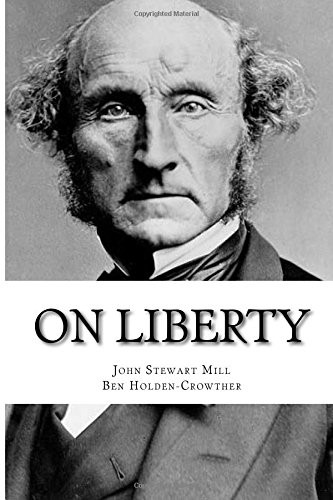
On Liberty
0
0
As an Amazon Associate and affiliate partner, Menrva Books earns from qualifying purchases. Learn more
Author Description
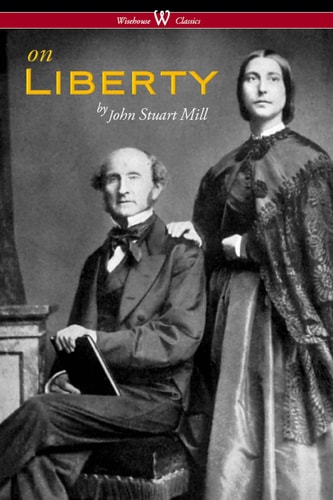
ON LIBERTY is a philosophical work by English philosopher John Stuart Mill, originally intended as a short essay. The work, published in 1859, applies Mill's ethical system of utilitarianism to society and the state. Mill attempts to establish standards for the relationship between authority and liberty. He emphasizes the importance of individuality which he conceived as a prerequisite to the higher pleasures-the summum bonum of Utilitarianism. Furthermore, Mill criticised the errors of past attempts to defend individuality where, for example, democratic ideals resulted in the "tyranny of the majority". Among the standards established in this work are Mill's three basic liberties of individuals, his three legitimate objections to government intervention, and his two maxims regarding the relationship of the individual to society "which together form the entire doctrine of (Mill's) Essay." ON LIBERTY was a greatly influential and well received work, although it did not go without criticism. Some attacked it for its apparent discontinuity with Utilitarianism, while others criticised its vagueness. The ideas presented in ON LIBERTY have remained the basis of much liberal political thought. It has remained in print continuously since its initial publication. Mill's marriage to his wife Harriet Taylor Mill greatly influenced the concepts in ON LIBERTY, which was largely finished prior to her death, and published shortly after she died. (more on www.wisehouse-classics.com)
Menrva's Summary
THE THESIS
The work investigates the fundamental principles governing the relationship between individual liberty and societal/state authority. John Stuart Mill, a prominent English philosopher, applies his utilitarian ethical system to establish standards for this relationship, emphasizing the crucial role of individuality as a prerequisite for higher pleasures. He critiques historical attempts to defend individuality, such as democratic ideals that could lead to the 'tyranny of the majority,' and outlines three basic liberties for individuals, three legitimate objections to government intervention, and two maxims concerning the individual's relationship with society.
THE SCOPE MAP
- Mill's ethical system of utilitarianism applied to societal and state structures.
- An examination of the balance between authority and individual liberty.
- The importance of individuality as a concept linked to higher pleasures.
- Critique of the 'tyranny of the majority' in democratic societies.
- Mill's three basic liberties of individuals.
- Mill's three legitimate objections to government intervention.
- Mill's two maxims regarding the relationship of the individual to society.
THE AUTHORITY PERSPECTIVE
On Liberty was a highly influential and generally well-received work upon its publication, forming a cornerstone of liberal political thought. While its core ideas have remained a basis for much subsequent discourse, it did face some criticism. Certain readers and critics pointed to an apparent discontinuity with Utilitarianism, while others found certain aspects of the work to be vague. Despite these critiques, the book has maintained continuous print since its initial release.
Page Count:
103
Publication Date:
2019-01-01
Publisher:
Wisehouse Classics
ISBN-10:
9176371522
ISBN-13:
9789176371527
Non-Fiction
Philosophy
Political Philosophy
Utilitarianism
Social Theory
Individualism
Community Tags
Similar Books