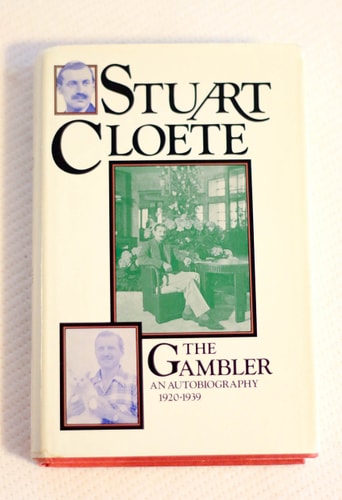
The Gambler: An Autobiography Volume 2, 1920-1939
0
0
As an Amazon Associate and affiliate partner, Menrva Books earns from qualifying purchases. Learn more
Author Description
With a memory for visual detail and the ability to recapture past emotion, Stuart Cloete continues the narrative of his life from 1920-1939. He has chosen to entitle this volume The Gambler because it deals with the most significant decision of his life - the decision to become a writer.The first part of The Gambler is a story of post-war rehabilitation, of adjustment to civilian life, to marriage. This took place on a farm in Northern France, where childhood memories and family ties made him feel at home. But increasingly Stuart Cloete felt a compulsion to identify with the land of his forebears - South Africa. Thus he bade Europe goodbye, and went out to the Transvaal, where he spent a number of years, building up run-down farms, and creating a home for himself and his wife.Temperamental differences and growing incompatibility gradually drove a wedge between the couple, and it was at this time that Stuart Cloete first felt the urge to write. In the mid-1930s he took the fateful decision, returned to England, and wrote his famous novel Turning Wheels It was an instant success in America also. It was on his way to New York to celebrate that he met his second wife.
Menrva's Summary
THE THESIS
This volume investigates the pivotal transition of Stuart Cloete from a farmer in post-war Europe and South Africa to a professional novelist during the interwar period. Cloete, a writer known for his historical fiction, utilizes his personal archives and reflective memory to document the psychological and environmental factors that prompted his career shift. The narrative examines the tension between his European roots and his identification with the Transvaal, ultimately framing his decision to write as a high-stakes gamble against the backdrop of personal and marital instability.
THE SCOPE MAP
What You Will Find
- Detailed accounts of post-World War I rehabilitation and civilian adjustment in Northern France.
- First-hand observations of agricultural life and land management in the Transvaal region of South Africa.
- A chronological exploration of the author's marital dissolution and the subsequent impetus to pursue literature.
- Insights into the publication process and international reception of his early literary success, specifically the novel Turning Wheels.
THE AUTHORITY PERSPECTIVE
This autobiography provides a candid look at the life of a mid-century novelist, offering a clear view of the personal pressures that often drive creative output. The text serves as a valuable primary source for understanding the colonial experience in South Africa and the professional realities of a writer during the 1930s.
Page Count:
221
Publication Date:
1973-01-01
Publisher:
Collins
ISBN-10:
0002162628
ISBN-13:
9780002162623
Memoir
Autobiography
Biography
Literature
Great Britain
California biography
South Africa
Community Tags
Similar Books