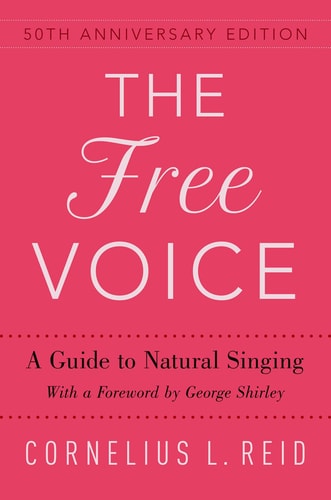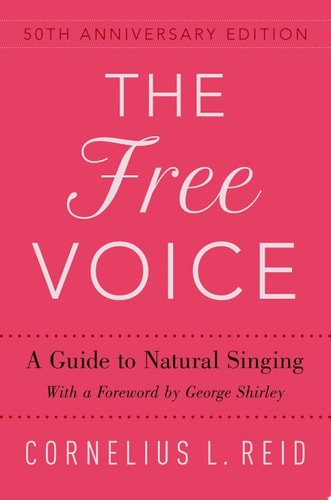
The Free Voice
0
0
As an Amazon Associate and affiliate partner, Menrva Books earns from qualifying purchases. Learn more
Author Description
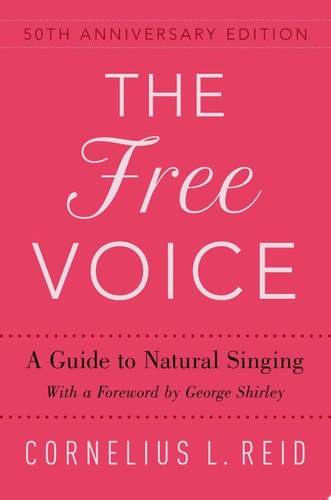
Great Vocal Teachers From The 16th Century Through The Early 19th Century Discovered Through Trial And Error How To Properly Develop The Singing Voice, And The Term Bel Canto Came To Be Applied To Both The Manner Of Singing And The Vocal Music Of That Period. But By 1858, According To Rossini, The Term Was Already Being Misused And Wrongly Confused With Fioriture. Well-schooled In The Teaching Of Singing, Rossini More Accurately Describes Bel Canto As Being Composed Of: The Building Of The Instrument; Technique, Or The Means Of Using The Instrument; And Style, Of Which The Ingredients Are Taste And Feeling. In This 50th Anniversary Edition Of The Free Voice, Renowned Vocal Pedagogue Cornelius L. Reid Articulates The Teaching Principles Of His Own School Of Functional Vocal Training, Grounded Firmly In The Old Principles While Remaining In Line With A Modern Understanding Of The Physical Value Of The Vocal Instrument. The Muscles That Move The Vocal Folds And The Vocal Folds Themselves Are Involuntary, And As Such, The Singing Voice Is Not An Instrument That Can Be Manipulated Directly. Reid's Approach To Singing Is One Of Indirect Control, Stemming From An Understanding Of The Vocal Registers And How Specific Patterns Of Pitch, Intensity, And Vowel Affect The Vocal Folds. Through The Vocal Exercises Outlined In This Book, And Catered To Each Individual, A Poorly Coordinated Musculature Can Be Brought To Efficiency. Only When The Musculature Of The Vocal Mechanism Is Well-balanced And Coordinated Can The Voice Be Free, And The Natural Beauty And Resonance Of The Individual Voice Come Through Without Force.
Menrva's Summary
THE THESIS
This book investigates the core question of how to achieve vocal freedom through the functional coordination of the vocal mechanism rather than direct muscular manipulation. Cornelius L. Reid, a renowned vocal pedagogue, draws upon historical bel canto principles and modern physiological understanding to argue that the singing voice is an involuntary instrument. He presents a framework of indirect control, where specific patterns of pitch, intensity, and vowel are used to balance the musculature of the vocal folds.
THE SCOPE MAP
What You Will Find
- Historical analysis of bel canto teaching principles from the 16th to the 19th century.
- A functional vocal training methodology based on register management.
- Specific vocal exercises designed to address individual muscular coordination issues.
Scope Limits
- The text does not provide a comprehensive history of vocal music repertoire.
- It does not cover psychological or performance-anxiety aspects of singing.
THE AUTHORITY PERSPECTIVE
Experts and vocal professionals frequently cite this work as a foundational text for understanding functional vocal training and the mechanics of the singing instrument. Readers often note the technical density of the prose, which requires careful study to fully grasp the author's approach to indirect vocal control.
Page Count:
256
Publication Date:
2018-01-01
Publisher:
Oxford University Press
ISBN-10:
0190683929
ISBN-13:
9780190683924
Music
Vocal Pedagogy
Community Tags
Similar Books