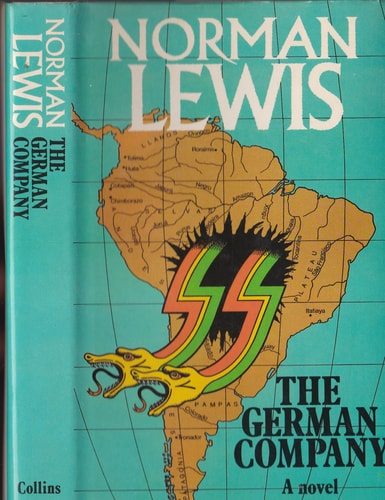
The German Company
0
0
As an Amazon Associate and affiliate partner, Menrva Books earns from qualifying purchases. Learn more
Author Description
In the aftermath of the Second World War, a British officer finds himself entangled in the complex and morally ambiguous reconstruction of a German town. The protagonist navigates a landscape defined by lingering resentment, shifting political allegiances, and the bureaucratic machinery of the occupying forces.
Menrva's Summary
THE PULSE
In the aftermath of the Second World War, a British officer finds himself entangled in the complex and morally ambiguous reconstruction of a German town. The protagonist navigates a landscape defined by lingering resentment, shifting political allegiances, and the bureaucratic machinery of the occupying forces. As he attempts to maintain order and implement policy, he faces opposition from both the local population and his own superiors, whose agendas often clash with the reality on the ground. The narrative framework utilizes a detached, observational tone to examine the fragility of peace and the difficulty of imposing justice in a defeated nation.
INSIDE THE PAGES
- Detailed depiction of post-war German social structures
- Exploration of the moral compromises inherent in military occupation
- Focus on the tension between individual conscience and institutional directives
- Atmospheric setting capturing the physical decay of a war-torn environment
- Character-driven examination of guilt and survival
- Subtle critique of administrative indifference
- Realistic dialogue reflecting the barriers of language and culture
- Non-linear reflection on the lingering trauma of the conflict
THE COLLECTIVE ECHO
This work is characterized by its clinical, observant style that avoids sentimentality in favor of a stark portrayal of post-war reality. The narrative suggests a deep interest in the mechanics of power and the psychological toll of occupation on both the victors and the defeated. Readers likely find the pacing deliberate and the thematic focus on moral ambiguity to be the primary driver of the story. The genre conventions point to a sophisticated examination of historical transition that prioritizes nuance over traditional heroic tropes.
Page Count:
239
Publication Date:
1979-01-01
Publisher:
Collins
ISBN-10:
0002222655
ISBN-13:
9780002222655
Historical Fiction
Political fiction
War
European
Post-War
Fiction