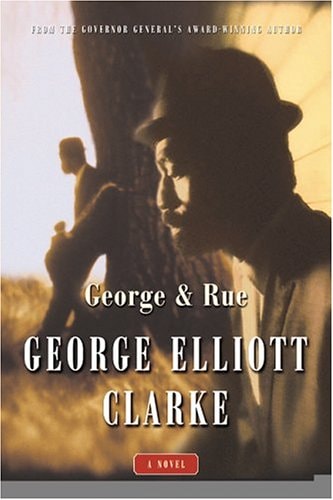
George and Rue
0
0
As an Amazon Associate and affiliate partner, Menrva Books earns from qualifying purchases. Learn more
Author Description
IT WAS, BY ALL ACCOUNTS, a “slug-ugly” crime. Brothers George and Rufus Hamilton, in a robbery gone wrong, drunkenly bludgeoned a taxi driver to death with a hammer. It was 1949, and the two siblings, part Mi’kmaq and part African, were both hanged in Fredericton for the killing.Those facts are also skeletons in George Elliott Clarke’s family closet. Both repelled and intrigued by his ancestral cousins’ deeds, Clarke set out to discover just what kind of forces would reduce men to crime, violence and, ultimately, murder. His findings took shape in the 2001 Governor General’s Award–winning Execution Poems and culminates brilliantly in George & Rue. The novel shifts seamlessly back into the killers’ pasts, recounting a bleak and sometimes comic tale of victims of violence who became killers, a black community too poor and too shamed to assist its downtrodden members, and a white community bent on condemning all blacks as dangerous outsiders.George & Rue is a book about a death that brims with fierce vitality and dark humour. Infused with the sensual, rhythmic beauty that so often defines Clarke’s writing, here is a literary debut that will be marked by celebration—and controversy.
Menrva's Summary
THE PULSE
In 1949, two brothers, George and Rufus Hamilton, commit a brutal robbery that ends in the murder of a taxi driver, setting them on a tragic path toward the gallows. Driven by a need to understand the systemic and personal forces that led his own distant cousins to such violence, the author reconstructs their lives through a lens of historical inquiry and imaginative empathy. The narrative navigates the harsh realities of a marginalized existence, where the brothers are caught between a community paralyzed by poverty and shame and a wider society eager to cast them as irredeemable outsiders. Through a non-linear structure, the prose examines the cycle of violence that transforms victims into perpetrators, grounding the tragedy in the specific social landscape of mid-century Canada.
INSIDE THE PAGES
- Non-linear narrative structure that shifts between the crime and the brothers' formative years
- Exploration of the intersectional identity of the protagonists as Mi’kmaq and African
- Stylistic use of rhythmic, sensual prose that contrasts with the bleak subject matter
- Integration of dark humor to highlight the absurdity and tragedy of the brothers' circumstances
- Critical examination of systemic racism and the failure of community support structures
- Focus on the psychological erosion caused by persistent poverty and social exclusion
- Incorporation of historical context regarding the 1949 Fredericton hangings
- Thematic focus on the blurred lines between victimhood and criminality
THE COLLECTIVE ECHO
This novel is widely recognized for its lyrical intensity and its unflinching examination of a dark chapter in Canadian history. Critics often highlight the author's ability to transform a grim true-crime event into a complex meditation on race, poverty, and the nature of justice. The work is frequently praised for its rhythmic, poetic language which provides a stark contrast to the brutal reality of the central crime. Readers and scholars alike note that the book succeeds in humanizing the condemned brothers without excusing their violent actions. The narrative remains a significant contribution to the literature of the African-Canadian experience, challenging readers to confront the societal failures that precede individual acts of violence.
Page Count:
230
Publication Date:
2004-12-27
Publisher:
HarperCollins Publishers
ISBN-10:
0002255391
ISBN-13:
9780002255394
Literary Fiction
Historical Fiction
Crime
Canadian
Black Canadians -- Nova Scotia -- Fiction
Brothers fiction
Social Issues
Community Tags
Similar Books